Tuesday, 25 October 2011

A new member to Polish - English blogosphere

Slightly taken aback by the news that my high school class-mate from high school (VI LO im. Reytana) has just set up a bilingual blog on fashion. I can't sincerely declare I share Kasia's, interest in fashion trends, but whenever a young person takes up blogging, it's commendable. When the writer is not male and when she, as a Pole, decides to write in both Polish and English, the venture deserves even more glowing praise. Oddly enough, Kasia is the only person I know from the "real world" (i.e. except those I've got to know via Internet) to run a blog. Either blogging is not a popular hobby, or some people, like me, hide it from the rest of the world (although I made a progress, I showed the blog to my parents).

On the day she starts her "Fashion Corner" I wish Kasia thousands of bright ideas to commit to the blog and I hope she won't run out of energy and inspiration to keep on writing.

Sunday, 23 October 2011

Me, the sluggish blogger

Again I buggered up. Faced with scarcity of time over the week and manifold activities piling up for the weekend, I set myself a routine of writing once a week. This time I almost didn't manage. I planned to write about "the outraged", Polish movement which rose up as a response to Occupy Wall Street and similar itiviatives across the world. Maybe the next weekend will be more merciful. Over the week, unlike "the outraged" I burnt the midnight oil at work and from Monday to Wednesday could not even find time and energy to turn the computer on. Over the weekend on top of being burdened with family duties and household chores I had the choice either to indulge in physical (swimming pool, walk) or social activity or to stare at computer screen, and eventually opted for the former. Obviously if I had chosen to stay in and conjure up a mind-blowing post about capitalist societies rousing up, but striking a balance between economics, banking and down-to-earth issues seems more important than satisfying my readers. So... Apologies.

Maybe over the weekend I'll finally follow out my plan.

Sunday, 16 October 2011

The guilt

Student SGH? Me? I chose that nickname as I was setting up this blog in February 2009, because being a student was one of main social roles I would perform then and the easiest to put clearly into words. As someone rightly noticed, some time ago I graduated and no longer can call myself a student. Unlike many of my peers I have not struggled to find a job after I finished the studies, I do not work on "junk contract" (umowa śmieciowa), I have a permanent job. Someone said I am a banker. I think this sound misleading. I do not deal in high amounts of money, I just analyse credit risk, my job is to assure a company should be able to pay back the money it wants to borrow. I have worked too short to get it wrong at least once. I earn relatively well, though I was recently told my salary accounts for only 60% of average salary on my position in the whole industry. Unlike most of my compatriots, I have savings, given my age they are quite ample. I try to make even more money by speculating on stock exchange; sometimes I win, sometimes I lose. Plus the only asset I have is a car - a gift from my parents on occasion of graduating from SGH. And last Sunday I voted for Platforma Obywatelska because I was convinced, as almost 40% of voters, that things were quite alright.

Should I have remorse?

I something amiss in the short confession above? Let's dissect it.

Unlike many of my peers I have not struggled to find a job after I finished the studies - The whole debate can boil down to one question - is it true that a man's key to success lies in his own hands. Who are those young people who cannot get a job? Can anyone put together a profile of an unemployed graduate? What did they study? When choosing what to study, did they assess job prospects for graduates? During their studies did they engage in any student organizations? Did they do internships during summer holidays? What did they do to raise their qualifications? What earnings do they expect when entering the labour market?

It was a twist of fate that I work where I work. I partly owe it to luck. On Easter Monday last year I put in my application to Grasz o Staż contest. I cracked a three-page long case study and sent it, not holding out much hopes to be qualified to the next stage. Then out of the blue came a horribly tough interview at a bank. I was given ten minutes to prepare financial analysis of a company on a verge of bankruptcy. There was no space for luck, I had to prove my knowledge. I got in, what I later achieved was thanks to sheer hard work. And I never complained about my salary, employer's requirements, etc.

I do not work under a "junk contract" (umowa śmieciowa) - I cannot see the point in the fuss about junk contracts. For young people who still study they are excellent - no need to pay social security contributions, effective tax rate for such contracts for students is below 15%. Plus they offer more flexibility to both parties to such contracts...

I have a permanent job - now a different story. Despite having some job security (not only in contractual terms, but also at work, where I feel no one is going to lay me off), I am not creditworthy for banks. I do not plan to take out a mortgage, but if I wanted I would not get more than 140,000 PLN. This is... great news. The fewer people deserve, in banks' view, to be granted a loan, the more property prices fall and the sooner I can buy something for cash.

Someone said I am a banker. I think this sound misleading. I do not deal in high amounts of money, I just analyse credit risk, my job is to assure a company should be able to pay back the money it wants to borrow - maybe the case is that English does not distinguish between bankier and bankowiec (not to mention examples of rencista and rentier). I am a bankowiec - someone who works at a bank, but not someone who earns zillions and not, as many people tend to think, foist loans upon helpless clients. My job is to foster the bank's interests. In very simple words, my role is to check and analyse, which company will have capacity to repay a loan, which not, and to justify why. I do not rip anyone off and if a company does not get financing, it is not because I have it in for it. My employer pays me for taking care of quality of its portfolio, so I simply do my bit as good as I can.

I have worked too short to get it wrong at least once. But the economic slowdown is nearing and we are taking steps to prepare for it. One day I'll make a mistake, and I think this will be a valuable experience. One best learns from one's own mistakes...

I earn relatively well, though I was recently told my salary accounts for only 60% of average salary on my position in the whole industry. Many of my peers have inflated expectations regarding their starting salary. This one of main reasons why young people have problems on the labour market. My take on this is that they should, as I did, accept low salary at the beginning, and with time, through aforementioned sheer hard work, prove they deserve more. During the internship I had in summer last year I got paid peanuts, in February I started a three-month probation period over which I was paid more, than I got another pay raise and now I have no reasons to complain. I believe with time, provided the crisis does not spark off for good, my salary should go up again.

Unlike most of my compatriots, I have savings, given my age they are quite ample. - I do not understand why in this country people who are thrifty are at best scowled at. Being good at managing one's own finances is a virtue. Being able to amass some wealth, instead of squandering money does reflect well upon a man. Why those who save are punished, while those who borrow and live beyond their means are taken care of, helped out, etc.?

I try to make even more money by speculating on stock exchange; sometimes I win, sometimes I lose. - and those who buy and sell risk are now assaulted as well. Speculators are to blame for potential sovereign defaults? I know market participants are often insane, their decisions are driven by emotions, herd instinct, irrational, but after all many speculations are based on fundamentals (betting if Greece, Italy or Spain go bust is not unfounded) and on every speculation someone loses. Every speculator is sooner or later beaten in their own game. The only rule in that game that has to be obeyed is that no one should be bailed out. Once you take a risk, you should lose all hopes that anyone will give you helpind hand if things go wrong.

Plus the only assets I have is a car - a gift from my parents on occasion of graduating from SGH.. Yes, I do have remorse, when I pass by people tinned like sardines in a bus. Now I feel like shutting up.

And last Sunday I voted for Platforma Obywatelska because I was convinced, as almost 40% of voters, that things were quite alright. - and I voted for 'evildoers', 'traitors', I opted for the 'further downfall of Poland'. But for over a year I many times glanced at political decisions taken in Hungary and I am grateful to Jarosław Kaczyński for reminding me why I did not vote for his party...

Waiting for some waspich comments to crop up. Feel free to bash me!

Maybe next week about Wall Street occupiers...

Sunday, 9 October 2011

Peace, rather than PiS

We got the preliminary results, based on exit polls. Figures are still very approximate and may vary, but they clearly indicate PO is the party in the history of Poland to win the parliamentary election for the second time in a row. The same figures show is also will be able to keep on wielding power in coalition with PSL.

The victory of PO means no big change is in the offing, Poland is in for four years of predictable and pragmatic, yet sometimes mediocre and feckless rule.

Am I elated? I don't think there's a reason. Poles, including me, voted for PO, because there is no alternative, no better option. We have to make do with what we have. I wish they make wise decisions in the coming economic crisis. May they overhaul Polish public finances, as they have failed to do hitherto, may they utilise prudently EU funds, may they push this country forward.

I think Mr Kaczynski's speaking, not in the same manner as he did in 2007. I wonder how long before the first squabble breaks out...

Update, Monday 10 October
Winning PO scored over 39% of votes, runner-up - PiS, gained slightly less than 30%. The biggest winner is Palikot's movement that scored roughly every tenth vote. The election has brought about a considerable reshuffle in Polish politics...

In the meantime no one turned out to be well-brought-up enough to congratulate the winners. Soon after exit polles came to the light Jarosław Kaczyński threatened one day he would take the path of Hungary where Victor Orban's party won majority of seats in the parliament last year. I hope Poland will be faring well amid the economic slowdown and sovereign debt crisis. Politicians from the opposition already make a wish that the crisis wipes out Donald Tusk's government. Envy and hubris again take over. Those who want the crisis to overturn the prime minister want it to take its toll on Poles as well.

As long as they run Poland, may they do it prudently and mind the outcome.

Thursday, 6 October 2011

Home straight

If there is anything I can appeal for three days before the election, it is the presence. Not only the presence of mind when casting a ballot, but presence in the polling stations. When Sunday comes, please, go to the polls, exercise your right to choose your representatives, to choose the shape of Poland in years to come. I do not conceal my political preferences, I will vote for the "servile party of evildoers who have driven Poland to ultimate downfall", but I am not going to exhort to vote for any party. I am calling for high turnout. And please do not scratch beneath the surface. I am not going to prove the rule that the more people go to the polls, the lower the percentage of votes scored by wacky candidates is. Higher turnout gives a stronger mandate to rule the country. Whoever wins, should be authorised by the nation to wield power.

Last days of the lacklustre campaign to my surprise abounded in twists of action. On Monday Tomasz Lis in his evening TV show attempted to drag down Jarosław Kaczyński, but inadvertently dragged himself down by assaulting the leader of PiS in way far cry from objectivity that befits a journalist. Then came the inept pronouncemnt of Mr Kaczynski concerning means by which chancellor Angela Merker rose to power.

In the last days of September it was quite clear to me that PiS would win the election; today this scenario is setting aside. There was a time when PiS had caught up with PO, but then it made one overriding mistake - it switched uncontrollably from deceptive image of peaceful party to its old good style marked by invoking resentments and hostility. I have also observed that so called "young, edcuated, from big cities" who had seemed so indifferent of politics somehow realised what was amiss and roused up. They simply realised PiS would win. Lots of people in Warsaw are so strongly convinced PiS will win this election. Discussions about politics, officially forbidden in my corporation are run every day in the office... Conclusion? If mishaps strike out of the blue... Will people take precautions?

And if PiS wins? Their victory itself will not be a disaster. It does not really matter who wins, what matters is how they rule. If PiS wins, they must get a chance to form a government and Mr Komorowski is duty bound to entrust this mission to Mr Kaczynski. I promise not to see red if Mr Kaczynski's party wins. I will wait for their first moves. And at the end of the day level of adrenaline in my body fell after cutting down on speculating on the stock market, so a reshuffle in politics might send it back up. And last but not least, I am sticking to my promise of setting up a political blog in Polish if PiS wins. That would be a challenge, but could it give pleasure?

Sunday, 2 October 2011

Beautiful late summer

A shame I haven’t illustrated this post with some photos. An egregious error…

The summer of 2011 did not pamper Poland with beautiful weather. It wasn’t actually cold, as average temperature of July was around long-term average and August was slightly warmer than average, but both months gave a rough ride to holidaymakers as both were much wetter than normally. For me, as I didn’t go on holiday, it was great – I was exempted from duty of watering the garden, plus the water bill was lower.

But September did a good job and made up for wet and moderately warm summer months. It was much drier and sunnier and even the typical September’s nuisance – big daily temperature amplitudes weren’t as bothersome as usually. In a word – weather was perfect.


Average temperature: +15.1C – 3 degrees warmer than last year, 0.4 degrees cooler than in 2009 and some 1.5 above long-term average.

Month-time high: 5 September, +26.5C

Month-time low: 17 September, +2.7C (I don’t recall it…)

The warmest day: 12 September – average temperature of +19.4C (typical for July)

The coolest day: 17 September – average temperature of +11.1C.

Two more facts bear out that this September was pleasantly warm: firstly on no single day I had to wear more than two layers of clothing in the morning, I always could do with a shirt and a jacket and quite often got sweat on my way to work (too hot in the underground trains) and this year until today we haven’t turned the heating on. In 2008, 2009 and 2010 we were forced to do it respectively on 16 September, 1 October and 29 September.

Two first days of October also brought a whiff of warm air, yet it wasn’t as warm as forecasters had predicted – yesterday day-time high hit +21C, in line with meteorologists’ forecasts, today it was no warmer than +16C, two degrees colder than what weather forecasts had said. Over the whole weekend the gloss of the sunshine was taken off by northerly winds and one had to find shelter to bask in the sun. Actually despite some chill the weather’s been up to the mark. I mown my lawn today in the afternoon and then cycled in a T-shirt only and during both activities I broke sweat it means it wasn’t cool. The bike ride was perfect, but again, shame on me, I didn’t take the camera and couldn’t take pictures of all the stuff I was taking delight in. But comes another warm and sunny Saturday or Sunday, shall I go there again and snap, snap, snap…

Such warmth is not really unusual for this time of year. On 8 October 2009 temperature in Poland’s capital hit +24C and Poland’s October heat record of +28.6C was set on 14 October 1966. The coming two days should be warmer, with temperatures in Warsaw up to +22C and sunshine (how lovely), then Wednesday is going to be cooler, Thursday again warmer, and true Autumn is predicted to hit on Friday and stay over the election weekend. Weather in the second decade of October is rather unforeseeable, I saw forecasts of both dull days with temperatures between +10C and +15C, as well as return of gold autumn with temperatures up to +20C. Hope the latter proves true. The later gloomy autumn comes, the longer will people be able to save on heating (how practical).

I hope the coming winter will be milder than two previous ones. Long-term forecasts, hardly ever reliable, say winter will come early and go early as well. The current predictions for the coming months are as follows:

October: chilly and windy, what anyway means is will be warmer than in 2010, the worst will be the last decade, when temperatures will be often dropping below +5C.

November: cold and wet, the author of the forecasts adds “just like last year”. Doesn’t she / he remember the beautiful warm and sunny long weekend in mid-November 2010?

December: frosty and dry, with white Christmas. This to some extent resembles December 2010. I’m alright with white Christmas. Afterwards the winter may go to Russia.

January: frosty, dry, with changeable weather.

February: should bring above-average temperatures and early spring.

March: spring in overdrive.

I personally hope the forecast proves true for February and March, the rest doesn’t fill me with optimism. I would prefer a warm winter for three reasons:
1. the aforementioned heating bill,
2. I’ll keeping the car outside the warm garage for the first time. I have to replace the battery, and with a new one I shouldn’t be afraid of temperatures above –20C as long as the car will be used every day and the battery will be charged up, but heavy snowfalls accompanied by low temperatures can play havoc with the battery and other sensitive elements of the car. But wait, so many people keep their cars in open air, so maybe I’m seeking out problems. But on the other hand I saw so many people having troubles with their cars kept in open air in winter…
3. I wish the builders of roads for Euro 2012: Niech im zima lekką będzie. If the weather allows them to press on with works, then there will be a chance that roads will be completed by the end of 2012 (the odds that they’ll be passable in June 2012 are negligibly low).

When trying to predict weather for the winter on my own, I tried to find correlation between politics, economy and weather. Take a look:

2005/2006 – winter is harsh and snowy. Polish economy enters the period of boom, power is wielded by Kaczynski brothers (some say it is a punishment for voting for PiS).

2006/2007 – until 24 January there is no snow, heat records are beaten in mid-January, then ensues a short, yet typical winter that ends for good in the last week of February. Polish economy still grows rapidly, Poles are sick of twin brothers wielding power.

2007/2008 – the warmest winter of the last decade. Snow lingers for less than ten days, on the coldest day the temperature drops to mere –14C. Polish economy is still doing well, but the power is taken over by PO.

2008/2009 – typical Polish winter, with frosts hitting –22C in Warsaw, periods of thaw and snowstorms. Nothing new in politics, but Poland is hit by world-wide economic crisis. Funnily enough, Warsaw is paralysed by a snowstorm exactly the day bear market on Warsaw stock exchange and zloty against other currencies hit their troughs.

2009/2010 – harsh and snowy winter. PO still wields power, economy is rebounding. When stock markets go up in the second half of January, Poland suffers in the fetters of winter. When in first week of February winter eases off, bringing sunshine and temperatures slightly above zero, stock market in Warsaw plummets by 4% for two days in a row.

2010/2011 – cold and snowy December, normal January, cold, but dry February. PO is still ruling, yet the party is falling into pieces, economy still grows, albeit the peak of the business cycle is near.

To recap, I couldn’t observe any significant correlation. If you see any linkages, feel free to share them with other readers and me.

And regardless of what future holds, expect another Winter timeline in March 2012.

Sunday, 25 September 2011

Let's twist again

We sang it at work on Thursday morning. As most analysts anticipated, The Federal Reserve did not decide to launch QE3. We have already had two round of quantitative easing programmes, consisting in buying government bonds by the central bank to boost liquidity in the financial system. This operation boils down to printing money (in civilised countries it is illegal, so maybe the United States no longer deserve being called "civilised"). The first two rounds carried out between late 2008 and early 2011 resulted in nothing more than bull market on stock and commodity markets. The beneficiaries of the programmes were speculators, so again, Wall Street was better off, Main Street had to stay in the doldrums.

Funnily enough, the old adage that you should not play against the Fed proved true again. Okay, buying up lots of government bonds from the banks gave them a lot of free money that had to be utilised somehow, so cash created extra demand on financial markets But hang on. Was it not the mechanism of self-fulfilling prophecy that worked again? If everyone believed stock prices would go up if the Fed began to print money, would eveyone not buy stocks which would be about to go up in prices?

Unfortunately for some of the speculators, the Fed has run out of space for another operation, as inflationary pressures began to heighten and more and more members of the governing committee were against the easing. The alternative plan will now be followed out - the US central bank will be determined to change the shape of yield curve, to be precise to flatten it. To follow out this plan, Mr Bernanke will order to sell short-term bonds and from proceeds he will buy long-term bonds. This should help the economy revive and is mostly aimed at kick-starting the housing market, as interests on mortgage loans are benchmarked to long-term interest rates. Time will tell if the real economy benefits from this operation, probably the action was arranged in collaboration with the government which will find it easier to sell its long-term bonds and thus the Fed will put back the moment when the United States default, which is just a matter of time. Of course they may not default, but only thanks to high inflation which would reduce the real value of US public debt.

Markets' reaction was more or less predictable and more or less apposite. Scatts, sick of hearing about stock swinging up and down ranted about "moronic stock markets". His piece is an excellent observation from a down-to-earth participant, yet not an economist and not someone who has an in-depth insight into the psychology of usually irrational market participants. In a comment I promised to refer to some of his points.

Scatts goes on about higher volatility. It has become the order of the day that one day stocks soar, the other plunge, sometimes there are a few days in a row when prices move in one direction, than the tide turns abruptly. Firstly, it proves we are in a bear market. It is not only the trend that tells you if a market goes up or down, it is also the volatility. The more nervous market participants are, the more likely it is 'bears' prevail.

But in such days volatility can be a friend. If you are a long-term investor, skip this paragraph... My prescription for successful trading when the markets are wobbly is to swim against the tide. If stocks skyrocket, I sell, if they plumment, I buy. The other part of my strategy is not buying and selling in one chunk but splitting orders into tranches and placing them and different prices. The goal is to lower as much as possible the average purchase price. The task is not easy, requires patience and intuition and brings out some adrenaline...

Communication - markets today buy and sell rumours, declarations, reckless pronouncements, unfounded theories. One politician says there is a plan to stave off Greek default - stocks go up. One economist says bankrupcty of Greece is inexorable and the sooner - the better - stocks go down. Someone says a French bank has troubles borrowing money on inter-bank markets - shares of that bank nosedive... On and on... Markets, if they acted more rationally, would respond to facts.

And facts are that nothing is going to save Greece, economies in Europe and across the world are slowing down, banks will need to write down Greek bonds. I cannot see any point in putting this hapless moment back. Let it happen, ride out the tsunami, what is brittle has to fall down before it grows too big (it has already grown, too late), economies need to be healed from all imperfections that cuased the crisis. Putting some countries and instututions out of misery would make the best way. But most people want to avoid chaos, maybe cherishing stability is a commendable strategy, but at all cost?

Just like in late 2008 and early 2009 Polish currency was recently hit by speculators. Short-sellers are throwing more and more PLN on the market and zloty has depreciated notably in September, by roughly 15% against EUR and USD. Last Friday the Polish central bank and state-owned BGK sold some foreign currencies to prop up PLN. They managed to bring down EUR/PLN and USD/PLN by some 0.10 PLN within half and hour. But is any central bank capable of fighting speculators trying to decrease the value of a specific currency? Of course buying PLN in bulk can activate some stop-loss orders and deter some speculators, but only in the short run. I would sooner desist from any actions. After all Polish companies are not hit by toxic currency option as they were in early 2009. Weaker PLN will boost our exports and competitiveness and increase Poland's chance to get off the second wave of the crisis lightly.

The main condition we have to fulfil to avert dire consequences of the second wave of crisis is wise management of our public finances, as private sector appears to be prepared quite well for a slowdown. And here reality fills me with dread for two reasons...
In two weeks the parliament election will be held. I do not dare to predict who wins it, but...
PiS, currently in the opposition wants to bring public finances into order, but at the same time promises the moon. Its declarations are self-contradictory - you cannot have a cake and eat it, you cannot give something to somebody without taking something away from someone else, you cannot increase budget expenditures anc cut budget deficit... It is not said in their agenda how they are going to raise money for all the giveaways...
PO, currently in power rather leans towards realpolitik and holds back from making big promises, but on the other hand the PO-led government has inclination for tweaking with figures, so they will bend over backwards to avoid exceeding the 55% public debt / GDP threshold (possible, if EUR/PLN rises on 31 December 2011 to some 4.70), which would force the government to pass a balance budget for 2012. That would not be possible without painful retrenchment and tax hikes, yet this scenatio is much better than sweeping the problem under the carpet and lifting the threshold and consequent obligations to curb deficit and implement turn-around plans. I hope no matter who wins the election, the people in power will be judicious. I know, Poles deserve more, but more important is what Poles can afford than what Poles deserve. And if we do not want to end up like Greece, we should be guided be the former.

Sunday, 18 September 2011

Hot autumn in politics

Looking at recent posts you might have inferred subject matters brought up recently depart more and more from what the blog should be mostly about. Time to get back to the core…

To politics…

The pre-election campaign has been in overdrive for a few weeks but I somehow do not feel that in three weeks I will go to the polls. This campaign in a way looks lacklustre for me, nothing really exciting has been going on. I do not know if it is good or bad, maybe I have too little time to keep track of the events in politics, but this campaign appears to me much different that all the recent ones (those in the run-up to parliamentary elections in 2005 and 2007 and before early presidential election last year).

The first remarkable thing is that two fellow bloggers are running for parliament. Toyah goes in for a seat in the lower house from constituency Katowice from Prawo i Sprawiedliwość (hereinafter PiS) list, while Paulina can be found on Warsaw’s lists of Ruch Poparcia Palikota. I will not have a chance to vote for any of them, I actually do not know personally anyone from the lists in my constituency.

A few months ago it was quite sure that Platforma Obywatelska (hereinafter PO) would be the odds-on favourite of the autumn election. Today, as the most recent polls show the biggest oppositional party, PiS has caught up with the ruling PO and support for the latter is in some polls is less than five percentage points lower than for the former. Actually it is not an astonishing tendency. PO’s victory would be the first ever win of the ruling party in Poland after 1989. Each time before, Poles were sick of previous governments and wanted something other, but that is a negligible factor. Never before have Poles been so divided in terms of political views. There was a strong hatred towards PiS in 2007, now there is a strong hatred, but mostly towards PO, hostility towards PiS is still alive, media still favour PO, but electorate of PiS has built up strong backing and keeps growing in power. It is no longer passé to admit publicly one votes for PiS, in this respect things look much better than in 2007 when voters of stepping down PiS were really despised and it was cool to vote for PO. Today those who back Mr Kaczynski can hold their heads up high.

I see some reasons why support for PiS is on the rise:
- people are sick of success propaganda pursued by the current government and run out of patience,
- the issue of Smolensk has been shelved,
- the new strategy of the party sets out to build a new image of open-minded, moderate party which wants to develop Poland on foundations of traditional values in a modern way,
- plus again it promises the moon in terms of economics, as if they were capable of cracking down on rising costs of living, unemployment, etc.

And there is reason why I do not understand it. All other parties take part in debates, while PiS members only organise press conferences of give interviews, they do not want to discuss with other parties. Supporters of PiS say it is because media are biased, opponents claim in turn PiS members know they are not prepared for a substantial debate. The truth lies… Do not hope to find it out… It lies where it lies…

I sometimes dare to think PiS wants to lose the election and focus on fighting for ultimate power in 2015, taking over the whole power (majority of two-third in the parliament plus their president). It could be even quite convenient to them to let PO run Poland through the end of the impending second wave of economic crisis, repeat hackneyed theses of Poland in a total downfall, chaos, ruled by incompetent people.

The campaign and politics as a whole abounds in inept pronouncements. The most noteworthy examples from the recent months are:

24 August – PiS deputy and ecomomic expert Beata Szydło says in Tok FM radio Polish GDP is shrinking (in the second quarter of 2011 it rose by 4.3% year-on-year).

26 August – PiS deputy Adam Hofman comments on the new clip of Polskie Stronnictwo Ludowe (hereinafter PSL) saying guys from the countryside came to the capital and go bananas.

Early days of September – member of Monetary Policy Council, Zyta Gilowska, former finance minister in PiS-led government publicly backs PiS and declares her readiness to take part in a debate with the incumbent finance minister on public finance. Such activity would have been a blatant violation of central bank independence and derogation of Polish central banking law. This move wound me up as an economist and on 7 September I was going to write a short note to condemn her misdemeanour. Eventually on the same day, during the ending session of the council Zyta Gilowska was probably taken to the task by the president of the central bank, came to her senses and backed out of the idea of engaging in political activity.


16 September – Grzegorz Napieralski, leader of Sojusz Lewicy Demokratycznej (hereinafter SLD) calls PO to create a government if PiS wins the election. The perplexing idea is quickly and rightly retorted by the prime minister Donald Tusk who reminds Mr Napieralski that only Poles have a right to decide who will form the government. If PiS gets the biggest percent of votes it should build a new government. Who would dare to enter a coalition with them is a totally different story…

Of course this coverage is biased, but still less biased than posts on other blogs…

Now a quick look at agendas of two parties that have a chance to win the election.

PO wants to press ahead with modernisation of Poland with the method of small steps. No big liberal reforms, no difficult choices. PO underlines what it claims to have done over last 4 years and silently concedes its defeats. Unlike SLD it does not focus on reviving memories of IV RP nor wants to put Jarosław Kaczyński and Zbigniew Ziobro before the Constitutional Tribunal. In a word – realpolitik

PiS also has an agenda, but it consists mainly of:
a) criticising feckless PO-led government,
b) taking pride in achievements of PiS-led government.

But seriously, as a biased recipient I have to say it is simply incoherent and lacks details. Let’s examine some parts of their economic agenda.

PiS wants to levy an additional tax on banks. At least one candidate of this party says banks are evil and if only possible would love to wipe them out. Coming back to the bank tax, no one says on what (equity, total assets, deposits, net income) the tax would be paid, but in the meantime PiS wants to boost banks’ income by extending the Rodzina na Swoim programme, under which the state pays half of the interest on mortgage loans to families who buy a new flat or house and meet specific criteria. The programme boosts demand on properties and consequently also property prices go up. This means the beneficiaries of the subsidies for the borrowers are (1) developers which can sell flats at higher prices and earn more and (2) banks which can charge clients higher margins (it is proved that loans under Rodzina na Swoim have higher margins, because cost for a client is lower than for a non-subsidised loan anyway). If property prices rise, fewer people can afford to buy a flat without a mortgage, so more people have to go to banks plus they have to borrow more. And so the banks earn more and debt burdens of households increase…

It is easy to say banks enslave people, but how does it impinge on the contribution PiS wants to make? Another thing I like in the agenda of PiS and speeches delivered by Mr Kaczyński is the phrases pieniądze się muszą znaleźć (money has to be found) and są zasoby do których można sięgnąć (there are resources that can be tapped). I have not heard until now where that money is, nor what those resources are. Pooling wool over poor voters’ eyes all the way… Or if somebody could enlighten me…?

Mr Kaczyński is of the opinion that the rich, not the poor should bear higher tax burdens. So why the heck did his party (with support of PO) resolve to cut the income tax marginal rates by 8 percentage points for the richest, by 12 percentage points for well-earning ones and by one, mere one percentage post for most Poles? Why did they cut sickness benefit contribution (składka rentowa) and grant tax deductible amount for each child under such conditions that the poorest could not deduct any amount? Key beneficiaries of all those moves are the well-off, it would be quite natural if those changes were pushed through by libreal PO, but they were passed in times of Polska Solidarna. Jarosław Kaczyński surely solidarised with the better-off.

If PO wins… Someone will surely say the election has been rigged.

If PiS wins… Someone will surely call Poles idiots, morons, etc.
If PiS wins… Life will be much more exciting.
If PiS wins… Maybe I will set up a Polish language blog on politics…

I do not think victory of Mr Kaczyński party would be a disaster, but I do not want it for Poland.  I do not want my country to follow the path of Hungary under Mr Orban’s administration. As much and as little.

Sunday, 11 September 2011

Early fall, there's a cloud on the New York skyline

9/11 is one of few events in the history I remember well. Once, in the first anniversary of Smolensk disaster, I brought back memories of that day. Now there is no point in repeating them, there is no use in writing how that terrorist attack changed the world, dwelling on how unbelievable it was would sound like a cliche. As an economist I could address the topic by weighing up pros and cons of suspending trading on Wall Street by the end of the fateful week or going on about the impact of loose monetary policy pursued by Fed to buoy up US economy after 9/11 on formation of US housing bubble.

The economic aspects of 9/11 are apparently compelling, but before I got really interested in economics I had had a period in my life which had had its climax in Janaury 2008 (winter exam period) when I went through a silly fascination with 9/11 conspiracy theories. Over that one month not only did I underperform on my exams which cost me a lower scholarship in the subsequent semester, but I also downloaded several films (Loose change, The greatest lie ever sold, In the plane site, The secret evil of September the 11th, Zeitgeist) about 9/11 alleged conspiracies and watched them. There was a time when I deeply believed in those theories, with time I grew out of them. My sound mind tells me they are hogwash, but I do not have sufficient information and knowledge to verify all facts and allegations... Conspiracy theorists make use of the fact people are unable to substantiate their claims and this lets conspiracy theories thrive...

So when everyone else looks back on shock brought about by the events we witnessed exactly 10 years ago, or commemorates the victims of the attacks, let's look at some stuff everyone passes over today, although it is said one-third of U.S. citizens do not believe in official account of 9/11 attacks...

1. The attack was plotted by U.S government to crack down on middle-east regimes, instill fear in people and cut down on civil liberties...

2. Alternatively, the U.S. administration knew about the plans of attack but did nothing to prevent them, as it was a good pretext for neo-conservative administration to pursue their plans set out in paragraph 1...

3. There was a large number of transactions in shares of airlines and insurance companies before 9/11, with the most recognised trading in put options on shares of United Airlines executed the day before the attacks...

4. The twin towers did not collapse on their own, but were demolished with use of bombs planted inside them...

5. Moreover, WTC 7 was "pulled (down)" in the same way - the building did not collapse naturally...

6. Pentagon building was a hit by missile...

7. Something was attached to planes which hit WTC towers, alternatively those were no passenger planes...

And many, many other... (the list does not enumarate several reported UFO sightings caught on tape)

I dare to claim 9/11 was the same for the United States as Smolensk disaster for Poland. Both tragedies were very traumatic for both nations, both left a mark in political arenas. Despite many dissimilarities, such as number of fatalities and who they were for the countries, causes and circumstances or the events, they have something in common - both have not been and stand no chance to be explained in 100%. In both cases investigations following the tragedies were said to be intransparent. Whenever some obfuscation emerges, there is room for doubt, looking out for inconsistencies. Actually both 9/11 and Smolensk were so hard to believe that it is in a way natural that there are people who will keep scratching beneath the surface to find out what "the real causes" were. Ten years after 9/11 many people believe it was an inside job, and I am sure in ten years there will be people in Poland saying Tusk and Putin contrived it, the plane landed and was shuttered by a bomb, Russian agents killed those passengers who had survived the impact, the birch could not break off the left wing or the fog in Smolensk was artificial... It can't be helped...

Sunday, 4 September 2011

Poland under construction

Or, if it rings a bell, Polska w budowie...

Not a political post this time. Beware through, the tetchy issue will have to return sooner or later, as soon as a politician who has no notion about economics will come up with an extraordinarily preposterous idea... The campaign hots up, but it kicked off before an official beginning, when the ruling party presented its brochure titled the same as my posting.

I do travel around Poland and I see the PO's catchphrase is not just a set of hollow words. Big injection of funds from EU has brought about a big progress in infrastructure development. When I travel in business taking photos raises immediately suspicions concerning the purpose of it (as if I acted with the detriment to my company), so I abide by stringent business trip policy guidelines and simply scrutinise construction with my eyes. But last Wednesday I travelled privately to Jelenia Góra and back, as my father and I were dropping off my mother to a sanatory there.

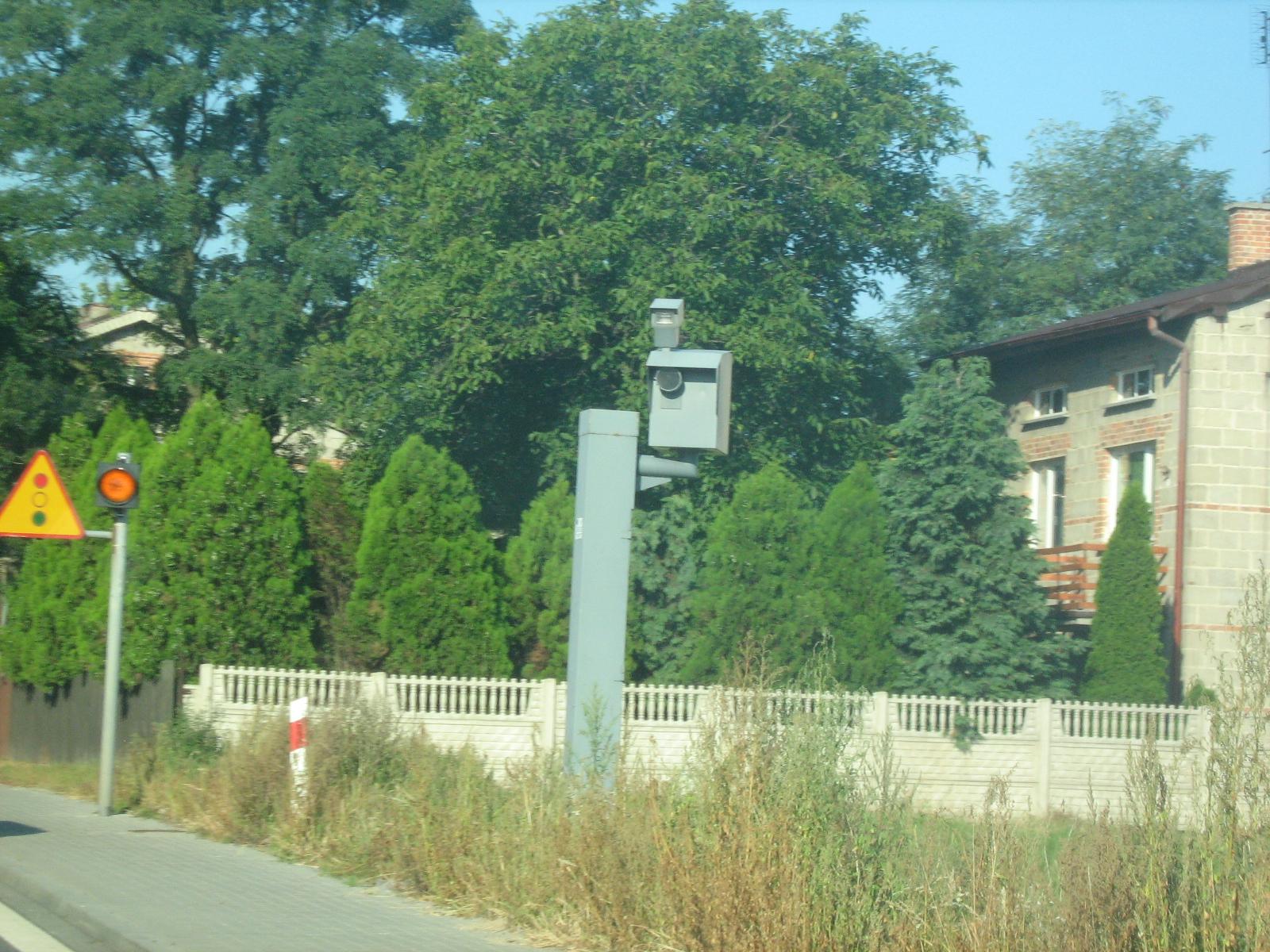
The coverage must begin with an indispensable landmark of Polish disgraceful roads. This traffic signage means you should expect to have the speed at which you are driving controlled by a funny device. Usually a driver who sees such sign slows down by 50 kmph. Abrupt braking may be potentially more hazardous than speeding, as a driver behind may not use the brake pedal as immediately as necessary.

And here comes the culprit. Inconspicuous, grey machine, quite often with its lens covered. This time I didn't see a single speed camera taking a shot of a speeding road hog. Some time ago the Polish parliament was about to pass a decree according to which speed camera dummies were to be removed. I don't know if it has been passed and if it has taken effect, but some of the cameras I spotted along the way looked fake.

To the right - the first photographed example of construction going on. An over 20-kilometre long section of S8 expressway linking Oleśnica and Syców. To be precise, the road should link Wrocław Psie Pole junction and Syców, the part of this road, namely bypass of Oleśnica has been completed a few years ago.

The day we ventured to Jelenia Góra the newly built motorway bypass of Wrocław was opened. The opening was scheduled for early afternoon hours, so around 10:00 a.m., when we reached Wrocław we drove the usual route of national road number 8 that runs (and takes, errr... used to take the whole traffic) through the city centre. Wrocław, no matter how charming it is, does not deserve to called a driver-friendly city. To the right - that's how a national road looked - wasn't it a shame. I like cobblestone, but it's not an appropriate road for transit traffic.

Trip through Wrocław had one benefit - I accidentally noticed the highest skyscraper in Wrocław, Sky Tower, also under construction. And in the foreground - a blue tram, a hint for discrenible eye the photo comes from Wroclove.

The stopover in Jelenia Góra lasted just half an hour. A shame we planned to go there and back within one day, as I'd love to roam around the town. I could only snap a street running towards the market square from the car window. Sightseeing beckons... And lack of true holidays over last two years makes itself more and more felt...

To the right - Jelenia Góra can't afford to lag behind with other regions where infrastructure is building up and it builds a flyover over national road number 3. I don't know for what reason it is erected, but Poland is experiencing an infrastructure construction boom, so not only private-funded construction booms lead to absurdities.

At 13:12, as we were approaching A4 motorway, the police opened the central section of Wrocław bypass motorway. No need to drive through the city again. On big junction before Bielany Wrocławskie we're turning left and just enjoy the ride... Traffic is rather sparse, I wonder if drivers knew about the opening and how many took a day off (Skyscrapercity forum told me later many did so) to celebrate opening of the bypass?

The most breathtaking part of the motorway (soon converted into expressway, to make it a toll-free road for cars) is the cable-stayed bridge - Most Rędziński, pride and joy of Wrocław's residents. I have to say I've never seen such a beautiful road in Poland, I'm looking forward to seeing something similar in Warsaw, part of it, linking Konotopa on the western fringes of Warsaw and ul. Puławska should be completed next year (construction has got behind schedule and pace of works is stunningly erratic).

An observant reader has surely noticed a missing piece in the photo coverage. These are unmade snaps of modernised Katowicka - national road number 8 between Rawa Mazowiecka and Piotrków Trybunalski. The dual carriageway was built in mid 1970s and was long due for reconstruction after which it will meet criteria of expressway. The reason why there are no photos of it is that I drove down and up this road and my father declined to save the horror of driving there for posterity. But if you really need to see what's going on there, get on to relevant page on Skyscrapercity forum.

920 kilometres covered within one day is not an enviable experience, but also one-day business trips look in the same way. We set off at 04:50 in the morning and pitched up home at 20:25, both my father and I were falling flat on our faces. Driving in such conditions is not a big pleasure, but when the big stride we are witnessing is made, driving around Poland will be faster and safer. The only pity is that EU will not be as open-handed as it was in 2007-2013 agenda and Poland itself will also fall short of money for infrastructural programmes. I only hope the pace of constrcution will only fall back rather than grind to a halt...