Sunday, 4 September 2016

Accidents will happen

I have held the driving licence for 10 years, I have used a car on a daily basis for five years on; the two last years were the period of more intense business travels, taken also by car, my own old Megane or company cars, meaning over the last two years I covered around 35,000 kilometres behind the wheel; on top of another 35,000 kilometres driven over previous eight years.

Driving instructors argue a typical driver has an accident during their first equator’s length (roughly 40,000 kilometres) of driving. Over that time I had one minor traffic collision, oddly enough not impacting my insurance track record, besides since October 2012 my track record behind the wheel has been impeccable, except for scratching right-rear wing in five weeks ago. I rubbed against a lamp post while parking parallel.

I varnished the eye-popping aftermaths of my haste and inattention, yet the scrape slightly dented my self-confidence, which after all should do more harm than good. Lesson learnt – I should be more cautious. Nevertheless, I did not change my mind and did not find driving on Polish roads dangerous, until last seven days, when I nearly had three serious accidents, none I would have been guilty of, yet they could have ended up with serious injuries.

Last Sunday on ul. Słowackiego (Warszawa Żoliborz), I changed lanes from right to middle and noticed an iffy driver in Honda City on left lane. I somehow foresaw he was an unpredictable motorist and braced for his manoeuvre of changing lanes from left to middle nearly ending in hitting the side of my car. Having cars on both sides, but no vehicle behind me, I pushed the brake to the floor and avoided the collision. Fortunately my passengers kept a cool head and did not scream (I still remember the attack of panic of my three female colleagues in November 2015, when somewhere between Płońsk and Sierpc our car was hit by an ice slab flying off the roof of a truck ahead of us (no damage to the vehicle to my surprise)).

On Wednesday as I drove up ul. Puławska, I nearly fell victim to kinked lanes and foolish driver on the intersection with Baletowa. He followed the swinging lanes before the intersection but behind it he drove straight ahead, cutting in on me, moving properly up the right lane. I swerved into the lane for buses marked out before intersection with ul. Pelikanów, thus avoiding bumping into meathead-driven Mazda 6.

The most scary narrow escape struck me the next day. I was on the slip road from Dolinka Służewiecka (westbound lanes) into ul. Puławska (southbound lanes). I spotted a ZTM bus running at the lane west of the viaduct carrying the traffic from ul. Puławska into Dolinka Służewiecka, but glimpsing to the left I failed to notice its driver was speeding (70 kmph) while I did at around 45 kmph. Where the slip road and the right-most lane of ul. Puławska met, he immediately began changing lanes into mine, not minding I was there and. to make it worse, not minding there was a cyclist (cyclists should be prohibited from riding such roads and she should have safety cycled down the pavement on the other side of ul. Puławska!) on the same (mine) lane. The presence of the cyclist (still wonder whether she realised what was going on, since she seemed to be totally unaware how dangerous the situation was) left me fewer room to move rightwards, while an idiot in BMW just behind my rear bumper left little room for abrupt braking. I slowed down gently, trying to keep minimum 20 centimetres from the bus side and the cyclist and managed. Only with hindsight I realised what near miss it was.

It occurred to me it would have been safer to travel by bus. The next day while driving towards Park and Ride Metro Ursynów I drove 75 kmph and kept a steady distance from a 331 bus. Indeed, both bus driver and I were speeding, however the difference in magnitude of our sins that I would stop my car (including time to reaction and stopping distance) within 50 metres and fastened belts would protect me, while the bus driver would probably stop after more than 100 metres and many passengers would be injured. In retrospect, I regret not having reported that incident to ZTM.

Speed and alcohol rank among the most frequent accident causes in Poland, yet the list should be supplemented with other sins of drivers, seldom mentioned…

Firstly, not looking around. Wing mirrors and rear view mirror help the driver control situation around them. If you know what is going on around, you immediately know whether you can swerve (this facilitates controlling the blind spot as well) or suddenly brake. Looking around involves also watching out for vehicles, cyclists, pedestrians or animals that might trespass onto the road.

Secondly, not foreseeing. As one gains experience behind the wheel, more situations become predictable and consequently, accidents avoided.

Thirdly, pushing one’s luck. Sounds ridiculously, but several drivers count they will make it (finish overtaking by forcing other drivers to brake or swerve, violating the right of way by assessing another driver will skim on their brakes to avoid a collision etc.). Even in 99% instances it works, the remaining 1% results in increased number or casualties and fatalities on Polish roads.

Fourthly, not keeping proper distance. The reasons why rear-endings are so common are not just speed or lapses of concentration. The dire effects of the above would not lead to so many incidences of bumping into rear of a car ahead, had the proper distance been kept.

Fifthly, tiredness. Fatigued, drowsy drivers can display similar reactions as intoxicated drivers. I should also tack on over-using mobile phones when behind the wheel as fumbling with them also worsen drivers’ concentration.

Sixthly, technical condition of vehicles on Polish roads. I do not want to gripe about the average age of vehicles on Polish roads, declining, yet still above eleven years. I have a 13-year-old car and I take care of it to ensure travelling by it is safe. Poles drive what they afford to but the owner or user is always to blame. Nearly brand-new (aged less than 3Y) vehicles from corporate fleets, if they are not looked after properly (believe me or not, 3Y post-lease cars are frequently rickety bangers), are in far worse technical condition that my car.

And #7, cyclists and pedestrians ignorant of perils in traffic or even traffic rules. Starry-eyed traffic participants not realising if they have right of way, for the sake of their own safety they should not exercise it at all cost and that fault of a car driver is not an excuse. What I hold most against cyclists is: (1) riding on fast-traffic roads (speed limits at or above 70 kmph), (2) choosing to take a road, where there is a decent cycling path running parallel to the road, (3) not sticking to the right thus hindering overtaking. What I hold most against pedestrians is that they (1) can stand (or hang around) next to a pedestrian crossing with no intention to cross a street, (2) cross streets where they are not allowed to without even looking whether a vehicle is going to smash them into pulp.

I have mulled over installing a dashboard camera in my next car, not for the purpose Russians put them up (to prove they are not guilty of an accident) but to keep record of on-going horror on the Polish roads. So far, I keep up with Polskie Drogi channel on YouTube and hold it dear. Watching the compilations of accidents helps me learn from others’ mistakes, adds to my experience and enhances my predictive skills. The scenes by Polskie Drogi often prove many accidents could have been averted, had somebody thought beforehand or foreseen other traffic participants’ crass stupidity.

Dangers on the road must not be shrugged off, yet this is the risk one should manage. Driving cautiously does not guarantee you will return safe and sound from every journey, yet minimises the chances of having an accident.

Sunday, 28 August 2016

Warsaw, from guests’ perspective

Skipped last week’s piece of blogging to look after my family (aunt, cousin and his wife) from Jelenia Góra who came for a few days to Warsaw. Heedless of political correctness, I confess living under one (especially one’s own) roof with a few people you meet once in two or three years is a nuisance. Yet, we all endured it without major clashes and their visit egged me on sightseeing trips through Warsaw and around I would not take in such number without third-party incentive.

They arrived on Saturday (over a week ago) before noon by Pendolino. For no apparent reason they chose to go by train, though door-to-door journey is shorter and less costly (for an equivalent of three adult ticket from Jelenia Góra to Warsaw they could buy petrol to come to Warsaw and drive back home.

On Saturday, after unpacking and lunch we set off to Prażmów where several of our common ancestors are buried. We visited their graves, burnt candles and I took the opportunity to discover areas of cemetery I had never ventured into, despite dropping in on there twice or three times a year. To the right, one of such places, a plaque commemorating local insurgents who fought in January Uprising.

On Sunday morning the relatives refused to sit back on a terrace and relax, so I had to take them for a longer stroll to Piaseczno. We inspected the reconstruction of ul. Wojska Polskiego. The scope of works is anything but overwhelming. The street will not be widened, but new asphalt will be laid, new pavements and parking spots built, two new pedestrian crossings marked out.

The major gain for local residents will be the newly built intersection with ul. Sikorskiego, which used to be a cul-de-sac since 2000. The new link might spare local car-ridden residents around one kilometre of detour. Note the florist’s and delicatessen grocery on the left side of my snap. The two facilities have not changed by a bit since 20 years (I lived a stone’s throw to this spot until 2005), resisting competition from posh flower shops and Lidl and Kaufland shops opened nearby in early 2000s.

On Sunday afternoon we paid a visit to Warsaw Uprising Museum. This was my second trip to that establishment this year, so I served as a guide. The museum, as each public one is proscribed to open its doors free of charge once week. Here the day when visitors do not need to buy tickets is Sunday, hence a long queue to the entrance. The wait, fortunately, did not take long and after some 20 minutes we crossed the door of the building. After an hour and a half, as we were leaving, rain was pouring down heavily. Bang went plans of ambling around the new residential and commercial developments of Wola district.

On Monday and Tuesday I escaped to work (refused to take the whole week off and put my patience to such test, imagine my grin when I was driving off bound to be away from home for eleven hours) so my mother took care of the guests, showing them nooks and crannies linked to our family’s history in Piaseczno and on Tuesday they went to Warsaw to Królikarnia Park, Łazienki Park and to Palace of Culture’s observation deck.

On Wednesday morning we headed for Polish Jews’ Museum. The probably most magnificent museum in Warsaw was opened over three years ago, on 70th anniversary of the Ghetto Uprising outbreak. The exhibition strikes with modernity and gives visitors the chance not just to familiarise with the history of Jews on the territory of Poland (not sparing the shameful pieces of it), but also acquaints them with Jews’ culture and religion.

Walking quite carefully through the exhibition took us more than two hours and if I can hint those interested in visiting the museum (definitely worthwhile), go through the first part of the exhibition, until the end of eighteenth century faster and than slow down, since as you move towards the present, the story gets more appealing.

Having left the museum, we strolled around the very centre of the capital to let the relatives see the recently built skyscrapers (in Warsaw’s terms building having more than 20 storeys) – Q22, Warsaw Spire and Cosmopolitan.

After the lunch the family were tired enough to stay in, while I took a bike for a short trip around the neighbour- hood. In Nowa Iwiczna, next to the station, pavement south of ul. Krasickiego was under construction. Dwellers of roadside houses were overseeing workers to ensure driveways to their properties were assembled properly (i.e. without curbs and not too slippery).

Little was going on close the station in Nowa Iwiczna. The level crossing has been opened, target tracks have been laid therein, yet the old island platform remained nearly intact and the place seemed to be lagging behind in terms of work progress, compared to other sections of W-wa Okęcie – Piaseczno modernised section.

Further north, in Jeziorki, tarmac has been ripped off ul. Karczunkow- ska and literally nothing was going on. As I turned up there, it was just before 4 p.m. so I expected to observe construction crews bustling about. Instead, the only humans at the scene were two men next to gatekeeper’s hut, staring at the desolated place. Besides, not a living soul in sight. Closure of the level crossing is an inconvenience for locals therefore swift pace of works should be ensured to minimise it.

In Dawidy, rail-wise, same progress of works as one station south. However here the level crossing has been revamped, yet gates have not been put up. Passengers can use one new platform next to newly-laid track used currently by trains running in both directions. The northbound track has been ripped and no signs of further course of works could be witnessed.

Cycling home along ul. Baletowa I spotted a ZTM bus, operating a newly launched 737 service. Inhabitants of this part of Zielony Ursynów had been waiting for a bus connection to town for 20 years and had greeted the first bus a few days earlier with ribbon-cutting, bread and salt. Must ul. Karczunkowska have been closed to bring those people closer to civilisation and relieve them from dependence on cars and rarely running trains which do not reach Ursynów or Mokotów?

On Thursday morning we set off to take a walk through Krakowskie Przedmieście. My mother and aunt visited interiors of all churches by the street, then we strolled around Plac Zamkowy. End of August is still a height of holiday season, so majority of people around (just like in Polin Museum) were foreigners.

Then guests took us to a café in Old Town Square to enjoy “home-made” ice-cream. While waiting for my portion, I snapped a bird, plucking and pecking flower petals. Then, I accidentally caught the fellow flying away, shooed by a waiter.

While heading towards the castle to turn right in the direction of the Unkown Soldier’s Tomb and Ogród Saski, I took a picture of the National Stadium. The sport arena looks splendid, unlike my photo which rather resembles an advertisement of Skoda Fabia (I somehow failed to notice the car, whose driver probably did not give a damn about traffic restrictions).

On Thursday afternoon we took the last trip to Konstancin Jeziorna. The place, which I used to pop in on often as a child, has undergone a huge change since I last visited the sanatoria park in spring 2013 (documented visit in 2011). The most dilapidated area near Jeziorka river has been marvellously revitalised, since three years ago where the pavement lies you could see a narrow trampled path, and wild shrubs were overgrowing it on both sides. The old sanatoria building was demolished to give way to a spa facility.

Hugonówka café, opened in 2014, is now the main cultural house in Konstancin, serving both as eatery and as scene of theatre and open-air cinema. Compared to how badly it looked in 2013, the stride made here brings out joy. Konstancin now is one of excellent weekend trip destinations for Varsovians!

On Friday early morning another Pendolino took my cousin and his wife home, while my aunt took a bus to Legionowo to visit her another cousin. The remaining household members could finally have a sigh of relief and after a solid cleaning up could enjoy a slightly longer weekend. Today around noon I set off to the airport to pick up my acquaintance from Germany who played host to me and my friend during holidays in 2005. I promised her to drive her to Wólka cemetery to visit her daughter’s grave, then we are about to eat out and her another daughter should take her home.

The weather these days is truly summer-like, yet +30C heat this time is absolutely tolerable for me. Cool nights and brisk mornings help air out interiors which give shelter from the heat in the afternoons, while the very air is dry and breeze takes the edge off heat. Long-term forecasts predict such weather is to continue until the end of first decade of September and may they prove accurate!

Sunday, 14 August 2016

But a change of heart comes slow…

Taking note of my unchanged approach to Warsaw Uprising last week has motivated me to rediscover my pieces of writing from the early years of blogging. I have run PES for over seven years; despite several crises I have soldiered on, yet the period of most intense and inspiration-driven writing lasted for somewhat more than a year. Later on, since the summer of 2010 when I took up a full-time job, posts began to appear once a week and were far less often written on the spur of the moment. Over the first year of blogging I blurted out thoughts I most needed to share with the world, then I moved on and freshness went by… Now I genuinely miss those days when youngster’s zeal was filling me with energy and inspiration do the job I do not feel up to today.

The posts I’m revisiting today were written when I was 21 or 22 (vs. 28 today). One would claim I should have grown mature; should have undergone a process which involves reshaping one’s views on several matters. When I read my very first posts (from the first three or four months of blogging) I find them childish and clumsily written. After this formative period, my style seemed to have been brushed up on.

Time to find out how many times I have changed my mind. As I set off to take this journey, I safely bet my opinions have not evolved much.

The concept of shelving the public debt still sounds like a daydream. Deep down I agree with myself, yet the more rational parts of me reminds me the government to some extent functions like an enterprise for which there is an optimum level of debt below which borrowing is a cost-effective form of financing.

In 2009 media coverage was my once source of information on pathologies in retail banking in Poland. In 2016 it looks not more different. Today I could write more about the dark side of corporate banking, yet even though I am striving to withhold my identity I resist the temptation.

Five years after graduation, I hear from youngsters I know my university continues to be on decline. In international rankings SGH has been overtaken some time ago by Kozminski Academy, marking an imminent change in the higher education system in Poland where public universities have been superior to private poor and profit-oriented ones.

Returning to 2009 I can boast about being a critic of the bygone shape of pension system in Poland before Donald Tusk’s government decided to dismantle it. With hindsight, as the private-run pension fund business has been effectively pared down, I believe every word I wrote was justified and the two-stage (2011 and 2013/2014) crackdown on the pension funds was a move in the right direction.

My (modest) proposal of a flat-rate tax with a high allowance still sound appealing, yet I would slightly modify it by introducing a higher tax rate and a higher allowance and would add child allowances to it.

The purpose of that post was actually to mock at the late president Lech Kaczyński. In November 2009 no one thought in less than five months Mr Kaczyński would tragically die. Everyone thought his term would draw to a close in a year and he would be replaced by a candidate from PO entourage. Today when I observe conduct of Mr Duda I appreciate Lech Kaczyński was not that bad, particularly in comparison to the current “head of state”.

After the decease of general Jaruzelski in 2014 discussions on legitimacy and backdrop of declaring martial law in Poland in 1981 have somewhat faded. Still I argue the state of affairs in Poland was complicated at that time and I believe we will probably forever suffer from lack facts and documents helping historians fairly assess that decision.

My essay on dire effects of loose monetary policy was written after a year or so of pursuit of such policies by major central banks. From today’s perspective I still conceptually agree with my reasoning and could write the same again, yet I need to bear in mind ultra-loose monetary policies have been run for nearly eight years and unconventional tools have also been harnessed to keep economies afloat. Oddly enough, evils listed in paragraph (1) to (4) at the bottom of the post have not materialised or have materialised only to a marginal extent which should prompt me to rethink my approach.

In early 2010 I challenged the widespread theory the financial meltdown had been caused by greed, pointing out its major cause had been lack of fear. Today the theory still sounds alluring while I need to add another, definitely not mould-breaking, note. Economic actors will do whatever they are not prohibited from to pursue their goals. Therefore regulations and their proper enforcement are vital to prevent financial crises.

My critical look at various investment theories could today be enhanced by the experience of recent years. Theory of macroeconomics has been reshaped by unprecedented phenomena witnessed in post-crisis years (negative interest years, ultra-loose monetary policies fuelling no substantial asset bubbles, scrapping the paradigm of risk-free securities, etc.)

While my financial well-being has incomparably improved since 2010 I still think interns should be remunerated for their work. My approach is shared by an increasing number of employers who erased unpaid internships from their job openings as part of incorporating CSR agendas.

The take on Poland between 1945 and 1989 appears well-balanced. I find assertions that one occupier was swapped for another in 1945 out of place. Keeping in mind Poland was dependent on Soviet Union, its political system was far from democracy and its economic order was ineffective, between 1945 and 1989 warfare was generally not conducted on the territory on Poland, buildings and factories were erected rather than torn down, an ordinary man, as long as they kept their mouth shut, had no reason to be afraid of their life and the number of victims of 44 years of oppressive system was lower than of 6 years of Nazi occupation.

In July 2010 I had a heated post-Smolensk argument with Toyah and his fellows being on the other side of the political divide line. Today we stand where we stood then, while the end-justifies-the-means remains a motto of PiS and their advocates. I have to also boast here about my impeccable anti-PiS credentials. Never, ever, since I have been seriously interested in politics, i.e. since early 2005, have I ever been enchanted by PiS. In 2005, when PO was bound to win the parliamentary election by a tiny two of three percentage points and create coalition with PiS, I was not fond of vision of this right-wing coalition taking charge of Poland. I became the PO electorate after the party put itself in opposition to PiS and its social agenda drifted left.

The picture of today’s career-minded youngsters painted in this post is a piece of utter rubbish, I confess. Most young people I know strike work-life balance well and have no problems with relationships with people although I still feel sorry so few Michał’s friends turned up at his wedding. Having more important things to do than celebrating important moments in friends’ lives with them is still a plague with my peers.

In this post I foresaw the history will be rewritten sooner or later. Just recall that sentence: On Tuesday “Gazeta Polska” published an interview with Jarosław Kaczyński in which he envisages Lech Wałęsa will soon be discredited and after his name is dragged through the mud Lech Kaczyński will become a symbol of Solidarity. This is taking place, proving how determined politician Jarosław Kaczyński is.

Today, even more than then, I find current affairs in my life more important than politics. There are moments I feel sick, yet I am growing indifferent. On Thursday I returned frazzled from a two-day business trip and did not even feel like learning what the sentence of the Constitutional Tribunal on the new law governing the institution is (content was predictable) and what implications of it would be.

Today I no longer would write rants on linguistic competencies. Despite using English every day at work and making use of all four skills (reading, writing, speaking, listening), my use of English has been narrowed down to professional topics. I wonder when my fluency in English was at its height, but I am nearly confident that moment is behind me. Keeping up excellent command of non-native language if you do not live in the country where that language is widely used is a challenge indeed.

Next post in two weeks at best, in three weeks at worst. My family from Jelenia Góra are visiting the capital so I will be looking after them next weekend, while after they go home I will need to take care of another acquaintance coming over to Warsaw. Take care!

Sunday, 7 August 2016

Sick of politics

One down, four to go. Counting down days until the end of his term and wishing him good health.

One of keystone vows of Mr Duda as a candidate was to convert toxic foreign currency mortgage loans to PLN at the rate at which they had been taken out. As the problem is quite intricate, it has been tackled by a dedicated task force several times. The first proposal of loan conversion into PLN at “fair rate” was unveiled in January 2016, another “draft” of set of measures to ease CHF-mortgage-ridden debtors was laid out in June 2016. Last week the president’s experts finally presented the draft law whose core element is the obligation for banks to refund the borrowers overcharged spreads…

YES WE CAN’T, one would love to paraphrase Barack Obama’s campaign slogan. After several promises to bail out borrowers (majority of whom are either well-off and their only problem is that their properties cannot be sold, or are suckers who wanted to outwit their fellows indebted in the domestic currency) the final scheme has been grossly whittled down in comparison to what had been pledged. Yet, as Mr Dera sincerely confessed, perception of a candidate differs from perception of an incumbent president.

Thanks to the new scheme hapless debtors will see principals of their loans decline by the amount of spreads overcharged at disbursement and at each instalment payment until August 2011, when anti-spread law came into force. Essentially, if you look at this detail, president Duda’s task force’s proposal is just the extension to the banking law amendment enacted by PO-PSL government (and initiated by former president Komorowski in the wake of soaring CHF in mid-2011) since it applies to payments between banks and borrowers made between January 2000 and August 2011.

So far no one has mentioned the risk of new law’s illegality. It needs to be noted though banks had charged FX-debtors excessive spreads, or simply had ripped them off, they had done it within the letter of law (there had been no limits on spreads) which in principle is not retroactive. Yet with constitutional tribunal brought to the heel, this should no longer be a concern.

Even if the total cost for banks in Poland reaches PLN 10 billion, the burden will be bearable and will not shake stability of the financial system. “Ensnared” borrowers are let down by Mr Duda’s scheme, while the refund of overpaid spreads will in fact constitute a transfer of wealth from banks’ stakeholders (not only shareholders but also clients) to a relatively wealthy group of PO and Nowoczesna’s electorate who will have their mortgage loans prepaid (or if they have paid off their debt, they will receive cash).

The 72nd anniversary of Warsaw Uprising outbreak was marked by a dispute to who the homage should be paid at W-hour. A handful of insurgent were called to minister Macierewicz’s office and forced to agree to a compromise that the full list of 96 fatalities of Smolensk air crash would not be read out, instead names of five persons involved in nurturing the remembrance of the Uprising would be read out.

The presence of Smolensk tribute during each and every event assisted by the army not only contributes to denigrating remembrance of 96 Tu-154 passengers who died in the tragic transport accident, but also is the top point on the agenda of rewriting the history.

Besides, the PiS-inspired industry of hatred is running at full steam. The two victims are 99-year-old general Scibor-Rylski accused of collaboration with communist secret services in post-war years and Zbigniew Galperyn. Beyond all doubt general Scibor-Rylski did co-operate in these bleak times, however by all accounts the collaboration was tactical and did not harm anyone. The campaign against Mr Galperyn kicked off just recently, after he criticised combining commemorations of Warsaw Uprising and Smolensk air crash and is backed by no evidence, a similar article could be written about anyone doing anything.

Actually it does not matter whether they collaborated with communist regime before 1989. Many today’s zealous supporters (Jerzy Zelnik) and politicians (Stanisław Piotrowicz) of PiS did it and their past does not disqualify them out of public discourse. What only matters is one’s attitude towards PiS today. The moment you firmly oppose against what knights of dobra zmiana pursue is the moment before the mud-slinging machine is set in motion.

Seven years after this pledge, my approach to the Warsaw Uprising has not changed. I still pay homage to inhabitants of Warsaw who valiantly fought against the Nazi occupier and to civilians who either lost their lives in the Uprising or endured probably the biggest humanitarian catastrophe in the history of Poland. I am sick when I see people who show off how they pay tribute to the insurgents, use the W-hour anniversary as an opportunity for lansik or when public figures attempt to capitalise on the anniversary. Commemorate, but not celebrate. Stop for a minute, in silence, with your head down and be thankful you live a in free, peaceful country.

Meanwhile, first serious cracks can be seen among affiliates of the ruling party who have relished on power. Backdrop of the decision to oust Mr Kurski from the public TV broadcaster’s CEO seat and then to defer his departure by nearly three months laid bare clashes between coteries. Unlike some of you may think, supporters of PiS are not a uniform group. Gazeta Polska entourage is not fond of wSieci / wPolityce and the other way round. The two entourages have also little in common with priest Rydzyk’s empire, not as influential as in 2005-2007. Just read Toyah’s blog to learn more. He often gripes about Rafał Ziemkiewicz, Tomasz Terlikowski and moans how other accolades of PiS hinder the good cause.

Quarrels between coteries do not herald break-up of the wide front of PiS supporters, yet the more perceptible they are, the more they remind Poles PiS politicians are no different than their predecessors, they go back on promises and become corrupt by power

Sunday, 31 July 2016

Civilisation winding down?

The pace of progress our civilisation has made over the last decades is impressive and incomparable with any other period of well-researched history. Mould-breaking developments have been made for instance in medicine, engineering, information technology and have left positive marks on our everyday lives.

Thanks to improvement in information exchanges and growing availability and affordability of long-distance fast transport, the world has virtually shrunk. Places out of reach a few decades ago seem now close at hand. Day-to-day unlimited communication with people is now not confined only to those who surround us. Those processes, as I notice, do not have “ever-expanding” character. We seem to be falling victim to them, or they are self-reversing. Just take a look.

Smartphones are the essential tool of information exchange for today’s youngsters, yet for many they have become the prevalent means of communication with the rest of the world. The quite frequent sight of a group of young people all staring at their phones instead of talking to one another is just one of bleak proofs of excessive dependence on technology.

Nearly any place on earth can be reached by air transport within 24 hours, and plane journeys are affordable for masses, yet there is a growing number of places being a no-go areas for tourists; places which a few years ago used to be popular destinations: Crimea, Turkey, Egypt, Tunisia, some Greek islands besieged by immigrants from Middle East just to name a few. Though Poles’ horizons have broadened, their holiday plans have been altered by new global threats, thus Baltic sea shore, despite cold water, changeable weather, wild crowds and sky-high prices of everything a tourist needs, is again the preferable holiday destination. In 1990s Poles would go to the seaside because overseas resorts were out of their reach financially or because they were daunted by the unknown exotic places. Today the seaside is a safer place (with improved tourist infrastructure one needs to admit).

Two years ago, as I roamed around Germany, I did not take into account I could become a victim of terrorist attack in a shopping mall or restaurant. Paris, Munich, Nice until recently used to have all makings of a safe place for tourists and residents. Terrorism is not an entirely new phenomenon in Europe. Munich was attacked during Olympic Games in 1972. Madrid commuter trains were blown up in 2004, London public transport vehicles in 2005. Yet the frequency of attacks and profiles or terrorists have changed. Today we do not witness Al-Kaida taking revenge for military intervention in Afghanistan. Today secret services do not observe terrorists collectively planning an attack together. Today’s fanatic killer is a young brain-washed male on a lonely, unaided mission to murder possibly many people before he dies martyr.

Societies are becoming less tolerant, I wonder whether they will become less outgoing. Will fear of and dislike for the others become a factor keeping people inside walls of their homes?

After the financial tsunami in 2008 many thought the new economic order will change workings of the world. In fact little has changed. Economies have ridden out the storm although one should be far from declaring they are doing well; had they been, interest rates would have been jacked up. Yet the societal change might be imminent. To keep going, people need to earn and spend money; produce and exchange services, yet who how flows between economic actors go no longer is a subject of economic debate, it has become more about politics and social science. From the economic point of view if in a developed economy there are low-paid jobs domestic workers are unwilling to take up, such gap is filled with migrants from less developed countries being a motivated, cheap labour force which moves the economy forward. From the social or political standpoints, migrants are becoming an unwanted element, regardless of their impact on economic growth and well-being of the whole society.

The ongoing social change is reflected in political choices and the victory of PiS in Poland last year is not the most glaring example. Donald Trump’s dreadful popularity in the United States and support for Brexit in the United Kingdom fill me with far more uncertainty regarding future.

I fear that the world is heading towards isolation, on micro and macro scale. Demise of bonds between humans is already perceptible. Decades ago people had a few close friends and had closer (though often not ideal) relationships with families. Today people have hundreds of acquaintances (a good measure is a number of connections on social networks) but despite this not seldom feel lonesome.

Besides, for most of July I felt too comfortably, too carefree, at times lethargic or numb. That state has given way to some sort of anxiety, a gut feeling something bad might afflict me personally in the close future. Hope it is just a mild version of mid-summer blues caused by to humid air ;-)

Sunday, 24 July 2016

Spine, down my spine

A few years ago, while reading results of my medical general check-up, my GP told me by the time I reached forty problems with health would not afflict me, but if I looked after myself well, I would stay healthy until I turned fifty. Then it would all go downhill anyway, since only a tiny fraction of population aged over 50 can boast about excellent health.

I can drop in on a dentist once a year to have my teeth checked preventively or at worst have one of them mended. I visit ophthalmologist at least once in two years to have my eyesight inspected. I get a medical check-up at least once in three years and wait for a spot-on comment that I have my car thoroughly serviced at least once year, so why do I care more about a depreciating tin. The last time I was on a sick leave was in October 2013, after a food poisoning, since then not a single cold caught. I am doing fine, so what’s the point in seeing doctor “just in case”, as some of my peers, who just like me have medical care packages paid by their employers, do.

This might be the thing of the past… Before each warm long weekend doctors advise people who lead sedentary lifestyle not to overstretch themselves. I heard those warnings also before the late-May Corpus-Christi weekend, but did not take them to heart. April and May were stressful, I sat long in the office to meet deadlines and once I saw the back of the dreadful streak, I wanted to make the most of days off. Swimming, cycling, garden and house works in abundance have put a pleasant strain on my muscles. On Monday following the weekend I barely got up from bed, being stricken by a pain down my lumbar spine. I thought the strain, just muscle soreness, would ease off after a day or two. It did not. With varying intensity the aches kept me company for four weeks; being a nuisance at work, at home, during business trips and private travels… I carried on, though there were days I could not remain sitting for more than half an hour; a limitation bearable in the office, yet uncomfortable during conferences or workshops when I could not stand up whenever I wanted.

Having returned from holidays I finally signed up to see my GP at Medicover; on the next day I had my spine X-rayed as prescribed. With the results and a relevant referral I marched to a physiotherapist. It turned out my spine, though not in pristine condition, is not ruined, yet if I do not want it to cause me further pains, I should take up regular exercise and change my habits. The former will not help if I do not pursue the latter.

The very sitting, inevitable if you work in an office, is not a natural position for a human spine, therefore it is crucial to minimise negative effects of sitting long hours. Firstly, do not sit on the tailbone (the Formula-1 driver position). There are two bones around the middle of your buttocks which should absorb the burden of your body as you sit. Secondly, your spine should be vertical as you sit. To allow for this, you should have a chair with properly shaped armrest, monitor ahead of your eyes (not lower, otherwise you will hunch), keyboard and mouse close to you (so that you don’t have to reach out for them and hunch).

Everyday habits also need to be changed not to strain the lumbar spine excessively. If you want to lift something heavy, bend your legs and let your thighs take the strain. Generally, I am switching from squatting and bowing down towards sit-ups and kneeling. I have quite strong legs (riding a bike a lot as a child) and they should take the strain off my spine, yet have to be careful about the knee joints. In other words time to live normally, but without encouraging the pain to keep me company. Unfortunately, over the coming weeks long (> 25 kilometres) bike trips have to be given up. Though I have chosen the bike in size corresponding to my height (XL; 180 – 195 cm), longer cycling takes its toll on my still sore spine, therefore I will most likely enjoy longer rides in late August at the earliest… Today I cycled to Zalesie Górne and back (total distance of around 20 kilometres, one snap on my fb profile) with a short break at my destination and felt I could do with a little bit longer trips, yet my spine calls for a break after some 45 minutes (or 10 kilometres) of recreational cycling…

Oddly enough, Wisła resort today had few visitors, despite conducive weather.

Sunday, 17 July 2016

History being rewritten

The Polish Internet has recently been flooded with humorous memes scoffing alleged accomplishments of Poland’s first back seat driver. The influx of mockery has been spurred by Mr Kaczynski and his servile henchmen (fellow politicians and reverent media) whose claims and deeds are aimed at changing roles of some people in Poland’s most recent history. Thus the official version of history, compiled by impious post-communist elites is set to be rewritten, to highlight roles of under-appreciated figures and to debase those whose merits have been undeservedly overrated.


Comment 1: beyond all doubt, Lech Kaczyński was one of the prominent figures in Solidarity since the inception of the movement, nevertheless no historian so far has dared to assert he had played the second fiddle in the movement.
Comment 2: beyond all doubt, Jarosław Kaczyński, despite holding no other function in the state than an ordinary lower-house deputy, is an actual leader of the group of people who formally exercise executive and legislative powers in Poland. The situation when a man actually takes decision but shuns responsibility for them is abnormal. I actually hope Mr Kaczyński takes over as prime minister.

Who is accountable for killing over forty Jews in Kielce and burning alive more than 300 Jews in a barn in Jedwabne? Minister of education in the PiS government lacked courage to admit those were Poles.
Comment 1: I would not put it down to Mrs Zalewska’s inadequate familiarity with Poland’s history.
Comment 2: A mature nation is capable of admitting to crimes its representatives committed, apologise for them and firmly condemn. Quibbling, as Mrs Zalewska did in the notorious TV interview, does not bring us closer to maturity in this respect.

You might think if Jarosław Kaczyński was not interned with the imposition of the martial law in December 1981, communist regime did not find him dangerous. Got it wrong my dear, the secret services planned to detain him, but accidentally did not do it, even though they had a chance to make up for it when Mr Kaczyński was shortly interrogated in the first days of the martial law…
Comment: You will not turn back time. On that frosty morning Jarosław woke up at ten a.m., went to church and in there found out something bad was going on. No bleak men knocked at his parents’ door to arrest him…

Who can take credit for bringing Poland into NATO? The omnipotent Leader and his crony Krzysztof Czabański! Any contribution of politicians such as Taduesz Mazowiecki, Bronisław Geremek, Aleksander Kwaśniewski? Who would care?
Comment: Wiadomości by TVP have become the most nefarious propaganda tube in Poland since 1989, beating by a long shot all previous SLD- or PO-affiliated circles of journalists and clearly biased coverage by TVN. From time to time I wrench my guts and watch Wiadomości. Selective choice of facts, failure to separate facts from comments and instructing audience what to think are now the distinguishing features of the main news programme, still financed from taxpayers’ purse.

Comment 1: rationally, why mixing up fatalities of a tragic air crash with actual martyrs who died fighting for free Poland?
Comment 2: the decision to bring in Smolensk component into each and every occasion assisted by military forces is already making people laugh it off and in effect denigrates the remembrances of crash victims.

Having vented by anger at the above, I still underline rewriting the history is less detrimental than tampering with the economy (may the clearly debt-financed child allowance programme be enough) or with democratic institutions. The five hundred zlotys per child, a tangible proof how PiS kept their flagship promise, has lifted some people from penury, raised their living standards or simply bribed them off. Other voters could not care less, a few million genuinely believe PiS are mending Poland. Thus PiSites enjoy support reaching 40%, not because they have dismantled the constitutional tribunal, not because they are ruining public finances, but because they are the only party with agenda for Poland. No matter how strongly I disagree with the vision of Poland by PiS, I cannot deny the have what other parties lack.

Below, a derisive poem I could not resist to share, nimbly offending the better sort of Poles who vote for PiS…

BYŁ RAZ…

Był raz grafoman, wierszokleta,
Dziennikarzyna z bożej łaski.
Lecz się przedstawiał: wieszcz, poeta,
I ciągle czekał na oklaski.
Choć jego wierszy nikt nie czytał,
On niepowodzeń znał przyczynę!
Zmowa! Grubymi nićmi szyta!
Jeszcze - odgrażał się - wypłynę!
Podkreślał stale swe zasługi,
Że on jedyny pisze z sensem,
Sam się ogłosił raz i drugi,
Że niby polskim jest Brassensem.
Mając, jak twierdził, lekkie pióro,
Oceny podjął się z ochotą,
Co dobrą jest literaturą,
A szczerze mówiąc, był idiotą.

Był raz kabotyn, aktorzyna,
Przez całe życie grał ogony,
Lecz to nie moja – mówił – wina,
Że jestem wciąż niedoceniony.
Nikt do teatru nie chciał chodzić,
Oprócz lizusów i klakierów,
Lecz przekonywał: nic nie szkodzi,
To spisek bandy reżyserów.
Innych nazywał szmirusami,
Albo wyrażał się z przekąsem,
Kpił w żywe oczy, a czasami
Złośliwie mruczał coś pod wąsem.
Czy to był Hamlet czy Medea,
Do złej gry robił dobrą minę.
Chwalił się: zrobię dobry teatr!
Ale, niestety, był kretynem.

Był raz szarpidrut, muzykancik,
Blade pojęcie miał o jazzie.
O mistrzach mówił: dyletanci,
A sam rzępolił ile wlezie.
Choć jego grania nikt słuchał,
Grał w swym mniemaniu pierwsze skrzypce.
Czeka mnie – mówił - niezła fucha,
O władzy śniąc i złotej rybce.
Choć słoń nadepnął mu na ucho,
Wielkiego znawcy przyjął pozę,
Dziś z talentami – rzekł - jest krucho,
Tylko ja jestem wirtuozem.
Wmawiał, że jest muzycznym tuzem,
Choć był podrzędnym muzykantem,
Zapewniał: ja gram dobrą muzę!
A tylko zwykłym był palantem.

Był raz pacykarz, beztalencie,
Malował straszne bohomazy,
Lecz przekonany, że ma wzięcie,
Wystawiał wszędzie swe obrazy.
Nikt tych obrazów nie oglądał,
Świeciły pustką wernisaże,
Winę w kolejnych widział rządach,
Mówiąc: ja jeszcze wam pokażę!
Wszędzie miernoty i nieuki,
A ja? Świat jeszcze o tym nie wie,
Że to prawdziwe dzieła sztuki.
Reszta - gryzmoły i badziewie.
O innych mówić zwykł z pogardą,
Ja się – rzekł - znam na dobrej sztuce!
Swój kicz nazywał awangardą,
A był zwyczajnym, pardon, bucem.

Był raz polityk, nieudacznik,
Z rozdętym ego, z kompleksami.
Z nim osobnicy dość dziwaczni,
Nieudacznicy tacy sami.
Zebrał do kupy pacykarzy,
Niedocenionych wierszokletów,
Wziął dyletantów, dobrał łgarzy,
Wiedząc, że nie brak im tupetu.
Obiecał im: będziecie wielcy!
Sam przy tym się dowartościował.
Więc maszerują wierni strzelcy,
Historię pisać chcą od nowa.
A polityczna kusi scena,
Więc większość poszła jego tropem,
By ponoć z woli suwerena
Naprawiać Polskę, świat, Europę.
Dobrał frustratów, kabotynów,
Zawistnych, mściwych oszołomów.
Omamił, wezwał ich do czynu:
My nie poddamy się nikomu!
Dał szansę wszelkim grafomanom
I sam cytuje hasła wzniosłe,
To wszystko nazwał Dobrą Zmianą.
A jest zwyczajnym tylko posłem.

© MKWD (Muzyczny Kabaret Wojtka Dąbrowskiego)
Druk: tygodnik Passa, nr 26 (816), 30 czerwca 2016


Those interested in the alternative version of truth, seeking to free their minds, are advised to indulge in reading in Jarosław Kaczyński's autobiography. I am looking forward to borrowing this book, as I am not going to purchase it and support Mr Kaczynski financially nor contribute to higher popularity of the book measured by number of paperbacks sold. If I come by it, I promise to review it.

Sunday, 10 July 2016

Wroclove

If there is a city in Poland for which I could leave Warsaw behind…
If there is a city in Poland whose beauty enchants me every time I visit it…
If there is a city in Poland whose energy recharges my batteries instantly…
Only Wrocław meets all criteria above. Unfortunately, moving to Wrocław would involve professional demotion (it terms of duties and pay) and the vision of my career ceasing to thrive so far has prevented me from considering relocation to Wrocław.

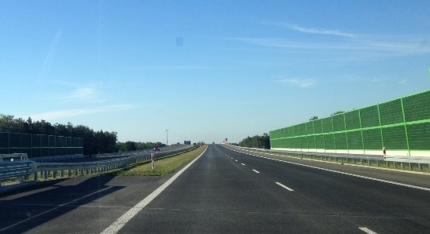
From 1 July 2016 Warsaw and Wrocław are eventually linked by network of motorways and expressways. The missing section of A1 motorway, from Stryków junction with A2 motorway down to Tuszyn, where it meets short section of A1 built in 1980s, serves as eastern bypass of Łódź and connects with S8 expressway running straight into Wrocław. Thus once you get onto S2 or S8 in outskirts of Warsaw, via A2, A1, S8 and A8 you may cover the distance of around 350 kilometres between the capital of the country and the capital of Lower Silesia without even having to downshift from the highest gear. If you stick to speed limits, the door-to-journey should last no more than three and a half hours (compared to at least five hours five years ago), beating Pendolino trains, which, if booked early cost less (unless your car carrier at least three people) and cover the route within three hours and forty three minutes (please add to this journeys to train stations in both cities).

When choosing how to get to bigger cities in Poland, Kraków is the only one where it is definitely more comfortable to go by train. For Katowice, Poznan and Gdansk I would be indifferent between car and train – both rail and road connections are decent and while station-to-station train travel durations are unbeatable, in terms of door-to-door journey times, vehicles make up… Łódź and Wrocław are the destination preferably reached by car…

I was lucky to stay there overnight and despite tight agenda (end of workshops on the first day at 5:45 p.m. and kick-off at 8:15 a.m. on the next day) my companions and I managed to reach the market square, take a short walk around this part of city in the rain, then checked in to one of numerous eateries to lounge about there until late evening. Only the weather was playing tricks with us. Sunny all day, with one intense shower, then two intense rainfalls caught us at the beginning of our trip to town and as we were waiting for taxis to return to hotels…

Wrocław beckons and a friend has advised me how to get there cheaply and quickly. As it turns out, Ryanair offers cheap return flights from W-wa Modlin to Wrocław for mere PLN 18.00. For accommodation, I strongly recommend two Ibis Budget hotels – Wrocław Stadion and Wrocław Południe (the latter can boast about better transport link to the city centre) where an overnight stay without breakfast booked in advanced can set you back a dirt-cheap PLN 39.00 (also for a double room).

Over the week ahead for the first time since late May I am not going to spend any night away from home, nor even venture away from Warsaw for the whole day. A strange feeling. The weather in the coming two weeks is rather going to resemble what we saw in July 2011. If showers and spells of sunshine are about to alter, relief from the heat will be conducive to drawing pleasure outdoor activities) and shortages of underground waters stand a chance to be replenished. Yesterday I cycled for the first time since nearly a month, today I’m bound to take another ride.

Sunday, 3 July 2016

Belated reflections on Brexit…

…because writing on one adventure needed to take precedence, as thanks to committing my thoughts to the blog, I have gotten the story off my mind, at least temporarily… From time to time I wonder whether mere writing, without hitting the “publish” button would not suffice…


Some musings on the same topic, published on the same day, here on W-wa Jeziorki.

Those familiar with the theory of economics, surely know the concept of certainty equivalent. To put it simply, individuals prefer to be certain to receive a small amount / quantity of a good rather than take a risk to get a chance to receive larger amount / quantity of the good. This notion hinges upon preference of humans to eliminate uncertainty in life and hold on to what one can be sure of. In economic and social behaviours of individuals the theorem appears to hold true, but behaviours of masses (less often in terms of economics) more and more often call it into question. Notwithstanding, I am not wiping my eyes in astonishment. Back when I was a student, I was told by lecturers interest rates could not drop below zero. How short it takes to prove wrong notions that had lasted for decades…

There is no absolutely perfect thing in life. You cannot expect to have a perfect spouse, friends, children. There is no perfect job, no perfect house, no perfect holidays, no perfect vehicle. If you thought long enough you would find something to enhance in everything that surrounds you. Imperfection is an indispensable part of our lives, hence we ought to accept it and live with to the extent it is tolerable or strive to change it where it goes beyond acceptability. Having written this, I do not condemn striving for perfection, which in essence is praiseworthy, as long as pursuit of perfection does not make you lose your mind.

The Brexit referendum, or rather its result, is a spot-on example of rejecting an imperfect, yet decent and predictable solution. Membership in the EU has not been devoid of drawbacks, yet once you throw the baby out with the bathwater, you ought to have a clear and feasible idea how to fill the bath again.

This brings back a memory of a referendum held in Warsaw in October 2013 whether to oust the then-mayor, Hanna Gronkiewicz-Waltz. The campaign of Mrs Gronkiewicz’s opponents focused on her presidency’s shortcomings, but did not go beyond kicking her out of office, i.e. shed no light on any plan how to improve the state of affairs in Warsaw once she is deposed. Inhabitants of Warsaw discerned this lack of constrictive alternative and voted their feet by not going to polling stations. Consequently, the referendum was deemed invalid due to turnout below validity threshold.

The Brexit referendum is astonishingly similar to Polish parliamentary and presidential elections in 2015 in Poland. Platforma Obywatelska and president Komorowski in early 2015 were akin to the EU: they offered stability and predictability, yet were self-focused, complacent and out of touch. Yet Poles and Brits have turned their back on stability and predictability and opted for a change. But watch out, in all three votes the winning side had a tiny majority. 51.89% of Brits voted to leave. 51.55% of Poles voted for Mr Duda in the run-off, PiS scored 51.09% of seats in the parliament. Mathematically such results tip the scales, yet just like a glass can be half-full or half-empty, they mean nearly half of voters who exercised their right are displeased… 

Similar tendencies are witness across the world. In Austria in the recent election, though the result has been overturned, an extreme-right candidate scored around half of votes. On the horizon looms an imminent threat of Donald Trump becoming the president of the United States, which given the country’s democratic tradition and civic awareness of its residents, is horrifying and gives lie to all fairy tales of what features a candidate for this office should exhibit.

What manifests itself on macro scale can be witnessed on the level of individuals. I have seen several people being so weary or dissatisfied with their jobs that they grabbed any opportunity to move over to a different company. Usually with hindsight they regretted their decisions and humbly admitted their previous workplaces were not that bad, but their inner desire to change was stronger than sound judgement… On the other hand, despite allegedly record-high number of divorces and informal relationship break-ups, among my friends, acquaintances and workmates aged 25 – 50, I do not see many people quitting their partners because of a crush / infatuation / fascination with someone else, or just seeking a fleeting romance to taste a change (I may have bad insight, since the latter is not something one should boast about and what is rather kept in secrecy).

A cool head tells me each decision akin to remain-or-leave question faced by Brits in June 2016, should be preceded by a substantiated cost and benefit analysis. Whatever is in question, I can bet neither of two solutions under consideration is perfect, yet if you dissect them, spot advantages and drawback of both and sensibly decide which prevail, you are more likely to make a reasonable decision, instead of letting yourself get carried away by emotions (a fodder for wicked populists) or herding instinct.

Unless ruling elites finally stop being busy looking after themselves and realise what causes masses to throw away stable and predictable schemea and dive into the unknown at any price, humanity will be on slippery slope. 

Besides, I would not simplify the matter and point at immigration (whose meaningful contribution is beyond all doubt) as main driver of voting in favour of Brexit. Europeans living in the golden age (which might be now drawing a close) for decades have not experienced war, deprivation and thanks to quite evenly distributed fruits of long-lasting high economic growth have had their needs and whims met. They have grown bored of peace and abundance and instead of appreciating what they have, keep seeking some new impulses, an undefined change, without taking heed whether it would bring more harm than good.

W dupach się poprzewracało, tyle w temacie :(