Showing posts with label Wrocław. Show all posts

Sunday, 29 July 2018

A break from lousy time in Wrocław

I will actually share my memories from the post split-up days once I bring all the stuff into order, i.e. once I rent a flat (hopefully one of landlords makes a decision this weekend), move out and handle all formalities (signing over my current flat to my ex-gf and closing our common bank account).

In the meantime, I went for a training (very useful one) to Wrocław and enjoyed two days away from the nasty goings-on I need to endure before I find the peace of mind.

The training on the first day ended before 5 p.m., then a drive to a hotel, check-in and off I go to town. For the sake of scarcity of time, I decided to get about Wrocław by car. Moving by my own four wheels turned out to be cheaper and faster way of moving between places, but driving around Wrocław remains far less pleasant than around Warsaw and bit of more stressful, even for a seasoned driver.

Around 7 p.m. I turn up to fountain park next to Hala Stulecia. The sun is still high, temperature around +27C, people roam around or sit by. A wonderful summer afternoon in a place which fills one with positive energy. I remember sitting here on 1 June 2018, in the first weeks of the relationship, in days when I was uncertain of its future. This chapter is now (almost) closed…

Jumped into the car and drove towards old town. Then, on foot I pass the bridge where lovers attach padlocks to symbolise their affection. Regardless of circum- stances, this is one of my favourite places in Wrocław, looks even more glorious, illuminated by the rays of setting sun.

A quarter later, wandering past the bank of Odra river, passing several tourists and local youngsters whiling away. It is still hot, I am breaking sweat, but the thought of air-conditioned hotel room lifts my spirits up.

The last part of my walk is the stroll to the Rynek and Plac Solny, the latter being one of my favourite places in Wrocław, while the former I deem to be a more ordinary one. The city is alive, but I begin to get drowsy after a wake-up at 4 a.m. to make it to Wrocław by 8:30 a.m., so I head back to where I have parked my car, around a mile away.

Plus a bonus shot, yesterday’s total eclipse of the moon. Not as splendid (with a naked eye) as advertised, here shot with my compact Olympus, without a tripod. Lack of professional equipment makes itself felt.

Apologies in advance if I don’t post next weekend. Need to get over the tribulations.

Sunday, 11 June 2017

Berlin calling

Took a nearly spontaneous trip to Berlin in the last days of May. I had had the intension to visit the capital of Germany for many years, yet I must have lacked a proper incentive to get my act to together and venture there. Actually, I was first inspired to travel to Berlin around the age of 15 when I was fascinated by U2 music, where the theme of many songs was the very capital of reunified Germany, besides another inducement came from watching “Wings of desire”, a film by Wim Wenders, shot in 1987 in West Berlin. And it has been the unbidden desire (further on it in some time) that spurred the very decision to book the accommodation in the capital of Germany and try to catch the climate of the city, in the meantime taking a break from everything and everyone.

A resident of Warsaw has basically three options to get to Berlin.
Firstly, by plane. The only airline operating flights between Warsaw and Berlin is Air Berlin (Lufthansa Group). One can choose from around four flights per day, while the price of a return ticket may reach no less than PLN 400, or even lower if you opt for cabin-luggage-only rate. In terms of travel time, the superior option.
Secondly, by passenger train. The services between Warsaw and Berlin are run by Deutsche Bahn and PKP Intercity. The journey lasts nearly six hours station-to-station and costs less than EUR 100, if the former carrier is chosen or I do not know how much if tickets from the Polish train operator are bought, since they are not available online.
The drawback of the options above is that you cannot make any stopovers along the way (something I have planned for my journey) therefore I had chosen to get there by car. On the way to Berlin I popped by my friend in Poznan and spent a few hours with his family, on the way back I took a detour via Wroclove. The benefit of such option might be the cost per person, increased with the number of passenger of board, another drawback is the fact you need to find an accommodation with parking space or pay for a  hotel garage (getting about Berlin by vehicle would be a crass stupidity) – after all a car is a liability as well.

While dropping in on Berlin, it is definitely worth to take an S-Bahn train to Potsdam. The ride last less than an hour and brings the opportunity to stroll around a picturesque, well-preserved palace and garden complex. While I visited the site, the sun was scorching, temperature was reaching +30C and though the weather was taking the gloss off the spirit of the place, the scent of magnificence and history was felt in the air.

The sites on my trail around Berlin were nearly all linked to the history of the city, especially to the period when Berlin was split into two cities separated by the concrete wall, being the symbol of divided Europe. To the right – East Side Gallery, a fragment of the wall on the eastern bank of Spree river which has been redeveloped by graffiti artists, although with far lower degree of freedom than e.g. at the wall of Sluzewiec horse race track in Warsaw.

Such border markings are present in many places in Berlin, however since post-border premises have been quickly developed, had it not been for the markings, you would not have told where the wall stood. To the right, a marking in Gedenkstaette Berliner Mauer, a commemoration site located in northern Berlin in the middle of the housing estate, where the wall used to tear the city apart.

Unlike Warsaw, Berlin has not cracked down on communist symbols as fiercely as Warsaw did in early 1990s and as it senselessly continues to do. To the right, I am standing at the intersection of literally Karl Marx Avenue and Paris Commune Street (unthinkable in Warsaw, even though both the philosopher and the Paris Commune had nothing to do with felonies of communism committed in the twentieth century).

Karl Marx Strasse was the thoroughfare of East Berlin, designed and built in the spirit of megalomaniac architectural style of 1950s. The place reminds of locality of Marszałkowska Dzielnica Mieszkaniowa in Warsaw. As I have learnt from information boards, in the early 1990s the buildings were dilapidated, yet the city took the effort to restore them to original state (rather not glory), so instead of erasing the bleak history of Berlin, next generations are meant to remember this used to be a capital of communist Germany.

Another such example, a Soviet War memorial in Tiergarten Park, less than half a mile from the Brandenburger Tor. Actually such sites are hidden in many Polish cities, including Warsaw (east side of ul. Żwirki i Wigury) and Wrocław (between Al. Wyścigowa and Al. Karkonoska).

Close to the very centre of Berlin is the Holocaust Memorial (Memorial of Murdered Jews in Europe) erected in 2005 and paid for by the government of Germany. 2,711 stone blocks symbolise the number of pages of Talmud. The very fact such place can be found at the very heart of Berlin proves well Germany is not afraid of speaking of its past sins and apologising for them.

Topography of Terror, an open-air museum in turn reminds of the dark period of 1933-1945 when Germany was under the rule of Nazis. This shameful heritage is presented in full light, with no understatements and no attempts to justify the evil. Germans can be proud of having atoned for its country’s sins and thus have set themselves free of the burden of history.

Not far lies another place which bears testimony to differences in approach to history by Germans and Poles. Checkpoint Charlie, the most famous border crossing in torn apart Berlin. The blood-tainted site is now surrounded by two fast food restaurants and if you turned around you would spot a pink pipeline. It is worthwhile to visit an open-air Soviet bloc museum, bringing close the dramatic history of the eastern side of the Iron Curtain.

The TV broadcasting tower, over 300 metres high is the highest landmark in the capital of Germany. For everyone fond of watching the world from above, this is definitely a recommendable attraction, since a lift, running at average ear-clogging speed of 6 metres per second carries you to an observation deck (price: EUR 14 before discounts).

To the right – one of many shots taken from the viewing platform (I must confess I found the open-air one in Frankfurt superior). My compact Olympus bought five years ago and used currently only during holiday trips has been up to the mark, as for its class. The optical 12.5x zoom gave the satisfying quality of the close-up photo, needless to say the photo contains details not visible by human eyes from such distance. Note the large green area, the Tiergarten park, a place in the centre of Warsaw I would miss.

Berliners can boast of developing the banks of Spree perfectly. The river and the city have been brought into one and river banks are excellent leisure spots, with several restaurants and hang-out areas.

After driving around 300 kilometres around German motorways, I confess newly-built Polish ones lie far ahead the legendary German motorways. On the way there I got stuck for an hours in a traffic jam on a modernised motorway ahead of Berlin; the inner bypass of the capital is plagued by dense traffic (although it is a motorway, three-digit speed in kmph is out of reach) and by traffic jams during rush hours. To the right, somewhere near Dresden, while driving from Berlin to Wroclove. Tip – if you take this route by car, avoid DK18 between Olszyna and A4 motorway in Poland. Wroclove-bound lanes made of concrete slabs of this dual carriageway date back to Hitler and perhaps have never been repaired. Outcome – maximum speed of 80 kmph at times is too much.

Then I spent another day in Wroclove, recharging batteries and roaming around my beloved places. Those, by all accounts, were the best moments of the trip. Here, at the fountain park next to Hala Stulecia, my feet soak in water, my body basks in the early-June sun. Moment taken and made perfect, worries shelved.

Took a tram to Plac Grunwaldzki then and march towards Ostrow Tumski. Passed by Katedra Św. Jana and headed towards Most Tumski, being also called the bridge of lovers who hang there padlocks with their names. School trips seasons was at its height, so the side effect of visiting the place was enduring the gaggle of teenagers.

Further on foot to Wyspa Slodowa, a gorgeous hang-out for students and teenagers, for meet-ups with friends, dating and sipping wine or beer. The place is illuminated by late-afternoon sunlight. Temperature is ideal, just slightly above +20C. For some reason, Wroclove is the only place outside Warsaw that feels like home.

Towards the end of my trip, the market square, lively place, full of tourists and open restaurants. I have been there so many times that this spot beckons less than other beloved sites, but if you drop in on Wroclove, not turning up here is a shame.

Spent the second half of fortnight-long holidays at home, catching up with meeting friends I had been hanging back on seeing, ticking off items from a list of overdue stuff to handle and trying to figure out what the future holds. Since situation on the front is quite dynamic, I am holding back from saving this for posterity. Once it clears up whether it falls apart or keeps going, I will keep a record of burning hot spring I have experienced in 2017. Unquestionably, the holidays drawing to a close were my best since 2014. Hope the ultimately best are still ahead.

Sunday, 10 July 2016

Wroclove

If there is a city in Poland for which I could leave Warsaw behind…
If there is a city in Poland whose beauty enchants me every time I visit it…
If there is a city in Poland whose energy recharges my batteries instantly…
Only Wrocław meets all criteria above. Unfortunately, moving to Wrocław would involve professional demotion (it terms of duties and pay) and the vision of my career ceasing to thrive so far has prevented me from considering relocation to Wrocław.

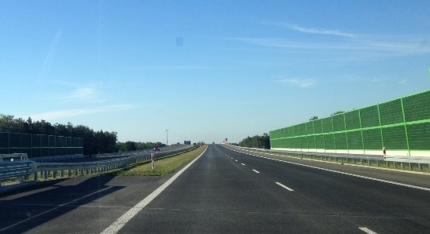
From 1 July 2016 Warsaw and Wrocław are eventually linked by network of motorways and expressways. The missing section of A1 motorway, from Stryków junction with A2 motorway down to Tuszyn, where it meets short section of A1 built in 1980s, serves as eastern bypass of Łódź and connects with S8 expressway running straight into Wrocław. Thus once you get onto S2 or S8 in outskirts of Warsaw, via A2, A1, S8 and A8 you may cover the distance of around 350 kilometres between the capital of the country and the capital of Lower Silesia without even having to downshift from the highest gear. If you stick to speed limits, the door-to-journey should last no more than three and a half hours (compared to at least five hours five years ago), beating Pendolino trains, which, if booked early cost less (unless your car carrier at least three people) and cover the route within three hours and forty three minutes (please add to this journeys to train stations in both cities).

When choosing how to get to bigger cities in Poland, Kraków is the only one where it is definitely more comfortable to go by train. For Katowice, Poznan and Gdansk I would be indifferent between car and train – both rail and road connections are decent and while station-to-station train travel durations are unbeatable, in terms of door-to-door journey times, vehicles make up… Łódź and Wrocław are the destination preferably reached by car…

I was lucky to stay there overnight and despite tight agenda (end of workshops on the first day at 5:45 p.m. and kick-off at 8:15 a.m. on the next day) my companions and I managed to reach the market square, take a short walk around this part of city in the rain, then checked in to one of numerous eateries to lounge about there until late evening. Only the weather was playing tricks with us. Sunny all day, with one intense shower, then two intense rainfalls caught us at the beginning of our trip to town and as we were waiting for taxis to return to hotels…

Wrocław beckons and a friend has advised me how to get there cheaply and quickly. As it turns out, Ryanair offers cheap return flights from W-wa Modlin to Wrocław for mere PLN 18.00. For accommodation, I strongly recommend two Ibis Budget hotels – Wrocław Stadion and Wrocław Południe (the latter can boast about better transport link to the city centre) where an overnight stay without breakfast booked in advanced can set you back a dirt-cheap PLN 39.00 (also for a double room).

Over the week ahead for the first time since late May I am not going to spend any night away from home, nor even venture away from Warsaw for the whole day. A strange feeling. The weather in the coming two weeks is rather going to resemble what we saw in July 2011. If showers and spells of sunshine are about to alter, relief from the heat will be conducive to drawing pleasure outdoor activities) and shortages of underground waters stand a chance to be replenished. Yesterday I cycled for the first time since nearly a month, today I’m bound to take another ride.

Sunday, 26 May 2013

A trip to Dolnośląskie

All the good things have to come to an end… Taking a long-awaited and well-deserved holiday break helped me recharge batteries and forget about most of everyday worries. All the plans, social and sight-seeing-related have been followed out, so with no regrets tomorrow I’m bound to submerge into corpo-world. However, before I brace myself for a head-on collision with the recently upsetting murky corporate reality, let’s share some uncanny pictures and thoughts from the days off…

The Sky Tower in Wroclove, to the right shot from the street level, on its south-west edge. The tallest building in Wrocław was under construction in late summer 2011 when I last visited the city. Construction works were finished in 2012. The edifice built by Mr Leszek Czarnecki, one of the richest Poles, comprises of shopping mall, offices and apartments and there have been ample controversies surrounding the building, its design and whether its fits the rest of Wrocław in terms of architecture.

You may like its design or not, but you can’t fail to discern it. It’s visible from all main roads running to Wrocław from the distance of some 50 kilometres and right away it should strike you that the structure stands out in terms of height – the second tallest building in Wrocław is two times smaller… Its shape – looks like a tube sliced aslant – is a distinguishing mark. Whatever the owner and architects wanted to achieve has been achieved – no matter whether the building’s design falls in with your taste, pretty nobody passes it by indifferently.

To the right – north-eastern entrance to the shopping mall. Lipstick on a big, as I called this peculiar composition – the sculpture “Profile of time” by Salvador Dali was put up outside the building in April 2012 and has sat there since then. To make it clear – I have nothing against placing the piece of craftwork there and find it one of more attention-deserving examples of contemporary art (bringing to mind the timeless picture by Salvador Dali), but who the hell has come up with the ridiculous idea to mar the sculpture with the advertising screen put up just next to it? Does this stand for due respect for art? Or is the craftwork meant to serve the consumerism?

Sky Tower overlooks Wrocław and the further from it you move, the more likely you are to discern the characteristic tube in the distance. To the right, a photo taken from the southern fringes of Wrocław, where Al. Wyścigowa (former national road no. 8) and Al. Karkonoska  (National road no. 5) converge and then run towards A4 motorway. Before motorway bypass of Wrocław was opened this was a place where all the southbound transit traffic would meet…

Between the afore- mentioned streets one can find a cemetery of Soviet Soldiers. Cannons and tanks have been giving a warm welcome to all visitors coming to Wrocław since late 1940s when the necropolis was laid. This is one of many similar places in Poland (including the cemetery in Warsaw by ul. Żwirki i Wigury) commemorating the Soviet soldiers who “sacrificed their lives to liberate Poland”. The inscription to the right literally says: “HERE REST THE SOVIET ARMY SOLDIERS, PARTICIPANTS OF WROCLAW BATTLES WHO HAVE LAID DOWN THEIR LIVES FOR LIBERTY AND INDEPENDENCE OF NATIONS OF POLAND AND THE SOVIET UNION”. Unless you are a hard-line commie, you should at least bridle at this pack of lies. What liberty? What independence? Many lunatics would probably be in cloud nine, if only they could obliterate such places of commemoration and go unpunished. I in turn hold the view such places should be taken care of and stay unharmed to bear testimony for next generations, also to bear testimony of omnipresent lies on which the totalitarian system was founded. Besides, those soldiers who rest there, were also victims of communism, cogs in a machine who were meant to die in order to let the Soviet empire expand westwards… They, as all humans, deserve a place of peaceful rest…

Coming to down-to-earth issues:

The weather was clement until Wednesday afternoon when temperature unexpectedly plunged and fell to mere +5C on Thursday morning. Given that spring came later than usual this year, some northern slopes in Karkonosze were still covered with snow (to the right, view from Kowary).

And two shots from Jelenia Góra – to the right, a pebble from Jelenia Góra, encased in cobblestone in the market square. Long story why it’s been here, every why has a wherefore. If any of the readers bothers to tell the anecdote, I’d be more than grateful…

To the right, again Jelenia Góra – every city must have its focal point, but few have it marked so distinctly. Interestingly, this is an element of a Church property. I won’t dare to speculate whether this is just a coincidence, or if it proves dominance of one specific institution in the Polish secular state ;-)

The trip was eventually in some 70% sponsored by a carefree driver who rear-ended me in Jelenia Góra. The speed at which the rear of my car was hit was low (again, inattention and centimetres lacking to make it a near-miss) and I was lucky not to sustain any neck injury (cervical spine is very sensitive to such accidents) and the damage done to my car was negligible. Upon checking the exhaust system and boot door lock remained intact, the culprit and I agreed on a few hundred PLN compensation for visibly scratched paintwork on the rear bumper. The damage doesn’t diminished the car’s utility value and it earned me some dough…

A propos motoring. After the period of run-up to Euro 2012 when several kilometres of roads were being modernised and built and ordeal drivers had to go through, now we can enjoy much higher standard of expressways and motorways – the wait was worthwhile! This was the first time I drove the newly built almost 100-kilometre long section of S8 (I last was there in September 2012, a month before opening) between Mszczonów and Piotrków Trybunaski and for the first time drove without even having to downshift to 4th gear 102 kilometres from Kostomłoty (junction on A4 motorway west of Wrocław) to Syców, where S8 expressway ends and turns into National Road no. 8, full of big trucks, small towns and numerous speed cameras… The missing section between Piotrków and Syców is under construction, due to be opened in 2015. Fills with hope. Actually driving the decent roads is faster and safer, but not necessarily cheaper. Unless you hold your horses and move excruciatingly slowly (100 kmph in my car is the speed above which fuel consumption begins to soar, from 6 litres of petrol per 100 km when the car does 100 kmph, to 8 litres when speed rises to 130 kmph and some 10 litres if I reach 150 kmph), the journey will set you back more (even more if you go via toll motorways, not the case this time) – but at the end of the day, comfort has its price…