Sunday, 26 June 2022

On prices rising

Michael has beaten it to me, with a splendid account of what Poles have to face up to these days. The imminent price growth has been a par for the course since pre-pandemic times. Recent outburst of public outrage over prime minister Morawiecki’s purchase of inflation-indexed government bonds has left me unimpressed. I bought such securities for the first time in July 2019; my grasp of economics told me to protect against recklessly loose fiscal and monetary policies. Time has proven me right, while the pandemic and the war in Ukraine have amplified the effects of local policy errors.

Looking back at the autumn 2021, when I visited underprivileged families as a volunteer of Szlachetna Paczka, I remember well people complaining about rising costs of living, especially more expensive food, electricity and heating. I worried this could send millions of people into poverty if prices of essential goods keep rising like that. I also can boast of predicting the threat of stagflation which was in the offing even without warfare on the horizon.

The factors which to some extent will continue to drive prices up are: the pandemic (not really likely to ease off for good), the fight against climate changes (which prompts consumers to change their habits) and the sanctions against Russia. The very latter will sadly hit more those who rightly aim to punish Russia for its cruelty, than the Russians, who for centuries have been accustomed to depravity.

The struggle which looms ahead of Poles now is multi-faceted.

Food prices will not go down due to droughts, shortages of fertilizers and higher energy prices. Climate change and negative supply shocks related to the war in Ukraine will push millions into famine, while residents of the developed countries will need to spend larger parts of their household budgets for nutrition.

Dwelling upkeep costs will not go down as well. They will be kept high by the push for the greener energy and decreased supply of fossil fuels from Russia. This will be painful for several poorer Poles, who will need to save on virtually everything to keep their houses warm during the coming winter. I believe we will all need to give up on some thermal comfort in months ahead and withstand temperatures of +18C in our interiors. Appallingly, some European countries, such as Germany and Austria are about to switch on their once shut down coal-burnt power plants, committing a sin of not restarting their nuclear power plants whose environmental impact is incomparably lower than of burning coal.

Fuel prices have gone up by some 50% vs. February 2022 and they might decline a but, yet given the cost of transport is included in nearly every price, even without direct exposure to petrol stations’ price lists, everyone will be worse off. So far, judging by traffic volumes, few people have given up on motoring in favour of public transport, cycling or walking – does not bode well for the economy, for the climate and for the public health.

What is being first hit by the inflation is demand for discretionary, non-essential goods. But if are to gain control over the surging prices, we must stop chasing such goods, resist the temptation to flee money. The circulation of money has to be contained, hence lending ought to be curbed and saving should be encouraged.

I have no good news for you. The best times for our civilisation are already past us. We have to brace ourselves for austerity unseen since decades. Many of us will need to watch every zloty before spending it. Our consumer habits will need to be rethought. Wisdom and sustainability will have to take over. Sharing will have to become an alternative to buying.

Besides, I am glad personally I am not impacted badly by the inflation. I put aside less money monthly, but do not have to abandon any expenses for purely financial reasons (I drive even less, but not because I cannot afford to fill up my car). My savings are shielded reasonably well from the inflation. Each day I am thankful for the sense of financial security. I hope this gratitude fends off the evil, albeit the outbreak of war east of Poland, being a tragedy to millions of innocent people, reminds nothing can be taken for granted.

Sunday, 19 June 2022

Autistic burnout

Several times I wrote on the blog about the episodes of depression I went through in my adult life and from which I have apparently recovered. I first made up my mind to share how it felt in August 2017, during the third episode in my lifetime. Last year the “dark sister” turned up again and I dedicated her one post (oddly enough around the same time of the year). At that time I was ahead of being officially diagnosed with Asperger Syndrome.

In each episode I was experiencing some symptoms which overlap a regular depression, but was not affected by others – low self-esteem, decreased drive / energy levels, avoidance of social events – they fortunately did not distress me. I put it down to my willpower and years of working on myself and how much I am worth as a human.

I carried on taking anti-depression pills, decreasing the dosage in line with my psychiatrist’s guidance from December 2021 to April 2022, when I gave up on medicines altogether. Although for my body parting company with neurotransmitter regulators was a harrowing experience, mind-wise everything was in order, until early May 2022, when I began to fall apart day by day. I was knocked down by a combination of factors which could have led to a relapse of depression, but instead of making an appointment with a doctor or returning to my “happiness pills” I decided to scratch beneath the surface. Was I only down in the dumps since the moment in life was anything but easy or was it an illness?

Back from last year I knew Asperger Syndrome and depression tend to coincide, or rather people with AS being misfits are more prone to get depressed. I began searching online whether depression of a person in a mild autism spectrum differs from depression experienced by a neurotypical person. Then the penny dropped.

I have come across a few articles which excellently described what I felt several times in life when I was overwhelmed. Autistic burnout or Asperger burnout, a recently discovered phenomenon (knowledge and awareness of it became prevalent in the English-speaking world in 2020 and 2021, although first articles trace back to 2017 or even 2016) is what has made some periods in my life an ascent uphill since early adulthood. Those were repeatable patterns – after a period of living like a neurotypical person, I got exposure to a load of stressors which bore down on my brain and led to a burnout – a blend of fatigue, exhaustion, nervousness, inability to take up major challenges. Some burnouts were severe enough to resemble depression episodes, some were milder, their durations varied, all receded, although some with help of anti-depression pills (and I cannot tell what would have been had I not supported the recovery with medicines). I consulted a psychiatrist who focuses on adults with AS, she confirmed my suppositions and advised to get in touch with a specialised therapist and abandon medicines which are most probably unnecessary if I can carry on functioning quite normally. Despite apparently getting on well with myself and fulfilling all social roles properly, I am determined to take up therapy. It will ease my pain of being alive, something I have felt for years, admitted to myself, but hid it from nearly everyone around.

In 2021 I somewhat shrugged off the Asperger diagnosis, claiming the official label changes nothing. In 2022 I realised to get on with being in the spectrum I need to raise my self-awareness. I already recognise my strengths and know how to make use of them. Now comes the time to comprehend my limitations, learn to embrace them and not to overreach myself trying to overcome them, as such attempts benefit nobody.

I hope by the end of the year, I will happier and… wiser and feeling more comfortable with my imperfection.

Sunday, 12 June 2022

A farewell to combustion engines

It happened. On Wednesday the European Parliament passed a resolution as a result of which brand-new cars with combustion engines would not be registered in the European Union since 2035. Traditional blachosmrody will give way to electric or hydrogen-fuelled engines.

The quest for limiting carbon dioxide emission, cleaner air and environment protection is inevitable and commendable, but is switching to electric cars the right direction? Does the future of motoring many have relished on, make sense?

The basic idea behind going electric is the lack of CO2 emission at a vehicle’s exhaust pipe. But have the proponents considered the total lifetime carbon footprint of electric cars and their traditional predecessors, given:
a) bigger environmental impact of battery manufacturing,
b) even worse impact of battery recycling,
c) imperfectly short usable lives (both in terms of years and mileage) of batteries?

The automotive industry will be forced to make a technological stride until 2035 which will:
- decrease costs of producing electric vehicles,
- increase their ranges and
- shorten charging times,
but 13 years appears to be a little time.

If we are to make use of electric cars conveniently, the coming decade is to be spent on building charging infrastructure, including adjusting installations in buildings with car garages. Unless kWh consumption per kilometre is decreased by that time, energy generation capacity and electricity grids would require significant upgrades. Countries which have invested in renewable energy generation will become beneficiaries of “going electric”, while those lagging behind, like Poland, might sadly end up… burning fossil fuels to produce electricity, under which scenario the carbon footprint would… increase.

In assessing whether electric car is environment-friendly, you must find out where the electricity for it comes from. If from a coal-burnt power plant, think twice

I hope by 2035 fast charging which would not shorten battery life would become prevalent so that car users no longer complain about charging times which last hours, which is particularly inconvenient during long-distance journeys.

Laws of physics are hard to be circumvented. You ought to remember an electric car is around 300 kilograms heavier (batteries are much heavier than a traditional engine, whose weight is not small anyway), which means more energy is necessary to set it in motion.

Looking at the above, you should sense my scepticism towards electric vehicles. If so, you are right, but I consistently claim engineers ought to focus on hydrogen and politicians should have the courage to tell people they will need to abandon their unhealthy driving habits.

Given the peril of the climate catastrophe, car ownership should become a luxury and a vehicle should be considered as a liability, rather than an asset. Its usage habits ought to be changed. Firstly – short-distance journeys around town, where a car can be easily substituted by going on foot, cycling or public transport should be eradicated. Secondly, car ownership should be taxed, while the tax rates should depend on a car’s weight (yes, the bigger your car, the more you should pay) its fuel efficiency or life-cycle carbon footprint (don’t turn a blind eye on environmental impact of battery production and predominantly recycling) and household status – second and next cars in the same household should be up to higher tax rates.

Our approach to motoring will require a change in mentality which is slowly under way, with many younger people no longer treating a vehicle as a status symbol, with many deeming it to be a costly burden. The change will, however, not take place overnight and many will remain unconvinced.

I fear the recent radical move of the EU will become a water to the mill of far-right anti-EU parties which will gain some support from defiant car-ridden individuals. I realise the climate change clock is ticking, but if we also know each revolution eats its own children, would it not be wise to consider a green evolution, rather a green revolution? An evolution would consist in a march towards a zero-emission world, probably too slow given the rising temperatures. But a painful revolution, accompanied by social anger could involve taking steps back to combat the unrest and reaching the ultimate goal not as quickly as planned.

Sunday, 5 June 2022

Pandemic diary – May 2022

Monday, 2 May 2022
60% of Poland’s population vaccinated with at least 1 dose. With respect to participation in the vaccination programme, Poland ranks sixth from the bottom in the EU after:
1. Bulgaria (30.2%),
2. Romania (42.5%),
3. Slovakia (51.7%),
4. Croatia (57.3%),
5. Slovenia (58.7%).

Saturday, 7 May 2022
The total number of infections in Poland reaches 6,000,000. Given the scant testing, 7,000,000 is out of reach, officially.

Wednesday, 11 May 2022
In a weekly report the ministry of health informs the number of patients in hospitals treated from COVID-19 has fallen below 1,000.

Thursday, 12 May 2022
The 7-day average number of new infections in Poland declines below 500, it last officially stood so low in mid-September 2021.

Saturday, 14 May 2022
The 7-day average number of new deaths in Poland decreases to 10. This gives some comfort. On top, excess deaths also suggest the situation is under control. In July 2021 the figure bottomed out at 2.

Monday, 16 May 2022
Stan epidemii is lifted in Poland, but actually is downplayed into stan zagrożenia epidemicznego which is a purely legislative change. I wonder how long before the next wave hits and how badly it is going to affect the healthcare system.

Tuesday, 17 May 2022
In the United States the 7-day average number of new cases hits 100,000, after bottoming out below 30,000 in late March. Try to convince me the virus is seasonal and there is no reason to worry while it’s warm.

Friday, 20 May 2022
Exactly one week ago COVID-19 officially reach the communist North Korea. Within that time, 2.24 million citizens of the country (population of 26 million) were diagnosed with symptomatic COVID-19-like disease (the country lacks access to testing). Examples of Taiwan and North Korea show no matter how stringent precautions are taken, no country can resist the virus.

Wednesday, 25 May 2022

While the world is slowly forgetting about COVID-19, rising number of monkeypox cases becomes a concern in several countries. Several questions remain partly unanswered, including the crucial ones, about transmission mechanism and protection offered by existing vaccines.


Monday, 30 May 2022
First non-bank-holiday-related week-on-week increase in new cases is just an outlier, but the change in the trend is in the offing, my intuition tells me.

Sunday, 29 May 2022

To the seaside in 2022

Holidaying came earlier than usual this year, with my late-spring / early-summer trip being brought forward by my mother’s complicated surgery (hip transplant) scheduled for 24 May. Mum is pulling through, though she will be on the mend by around the end of August. Given the short notice in which she had been notified about the admission to the hospital, I had to plan everything less than two weeks in advance. After last year’s foray to the seaside with the bikes, I decided to repeat it this year, however wanted to visit more than a dozen place within a few days of stay.

To the right, a sunset snapped on Sunday, 15 May, a few minutes past 9:00 p.m., from the nearly empty beach in Rewal (eight hours of drive from Warsaw). Polish sea shore faces north-west in most places hence is ideal for watching the sun going down into the sea. The only drawback was the temperature – wind chill below +10C.

The church in Trzęsacz a few centuries ago was built 2 kilometres from the beach. Over hundreds of years, the Baltic Sea has taken away much of the land and ruins of the church crumbled down the cliff. Currently the remnants are protected from the forces of the nature. Note the trees are not in leaf yet. Cold April and first half of May delayed vegetation.

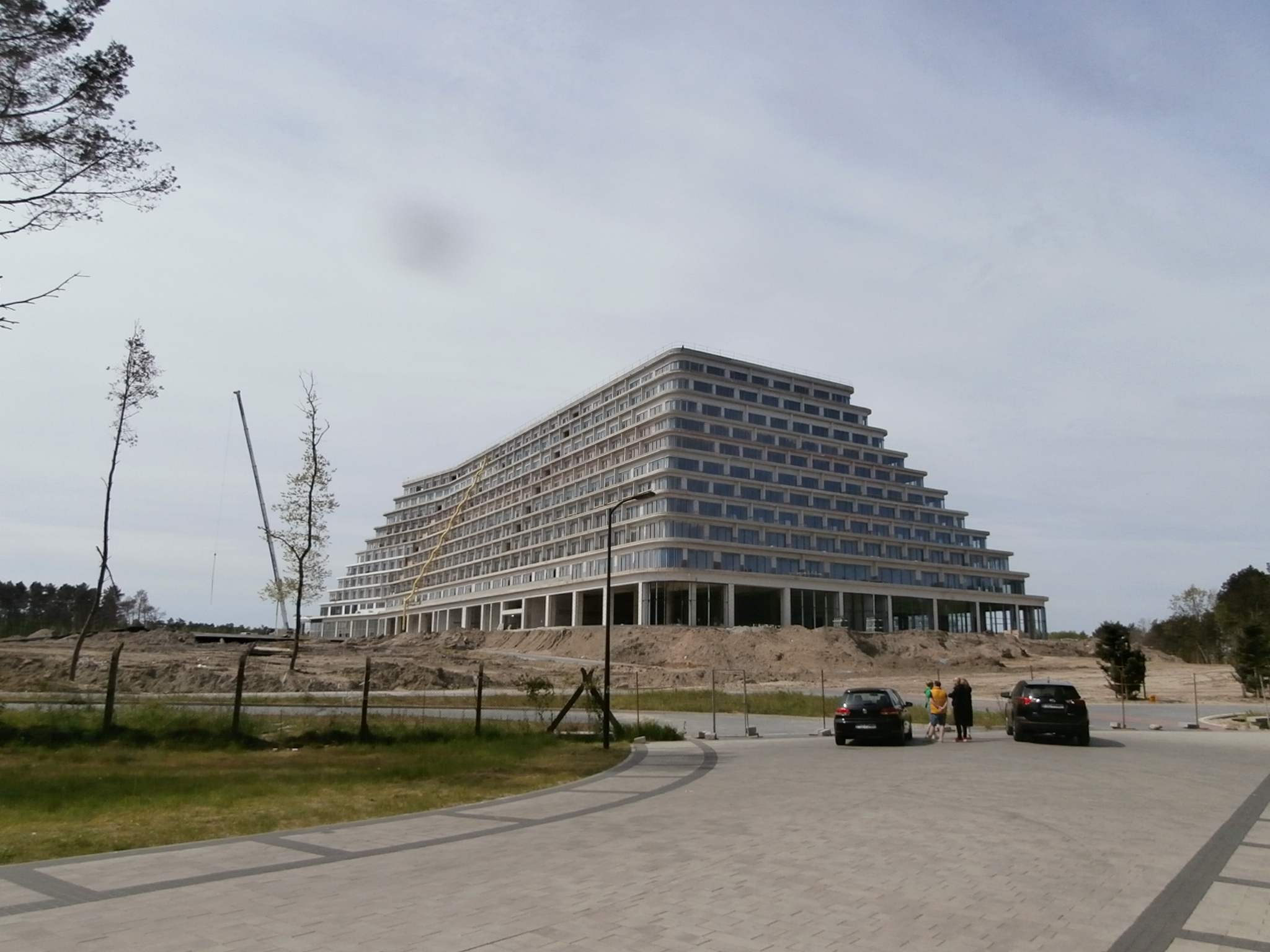
This horrific building on the western edge of Pobierowo is a Gołębiewski Hotel, still under construction. I can safely bet it would offer accommo- dation to more than 1,000 guests. An ugly blot on the landscape that will add up to droves of people invading seaside resorts in July and August. Worth noting such edifices are not a rarity in southern Europe.

The desolated Niechorze brought to my mind the streets of Slovenian Portoroz. Just like most towns and villages I visited, it was nearly empty. Tourists begin to turn up in early June, to flood the area during school holidays and then to disappear at the beginning of September.

I made several stopovers along the way, to stroll around, or just to sit on a bench and read a book. My vehicle was protected by a decent bicycle lock, purchased for 120 zlotys in Decathlon, well ahead I had to boycott the retailer. The lock is solid enough to give me comfort of protection against theft.

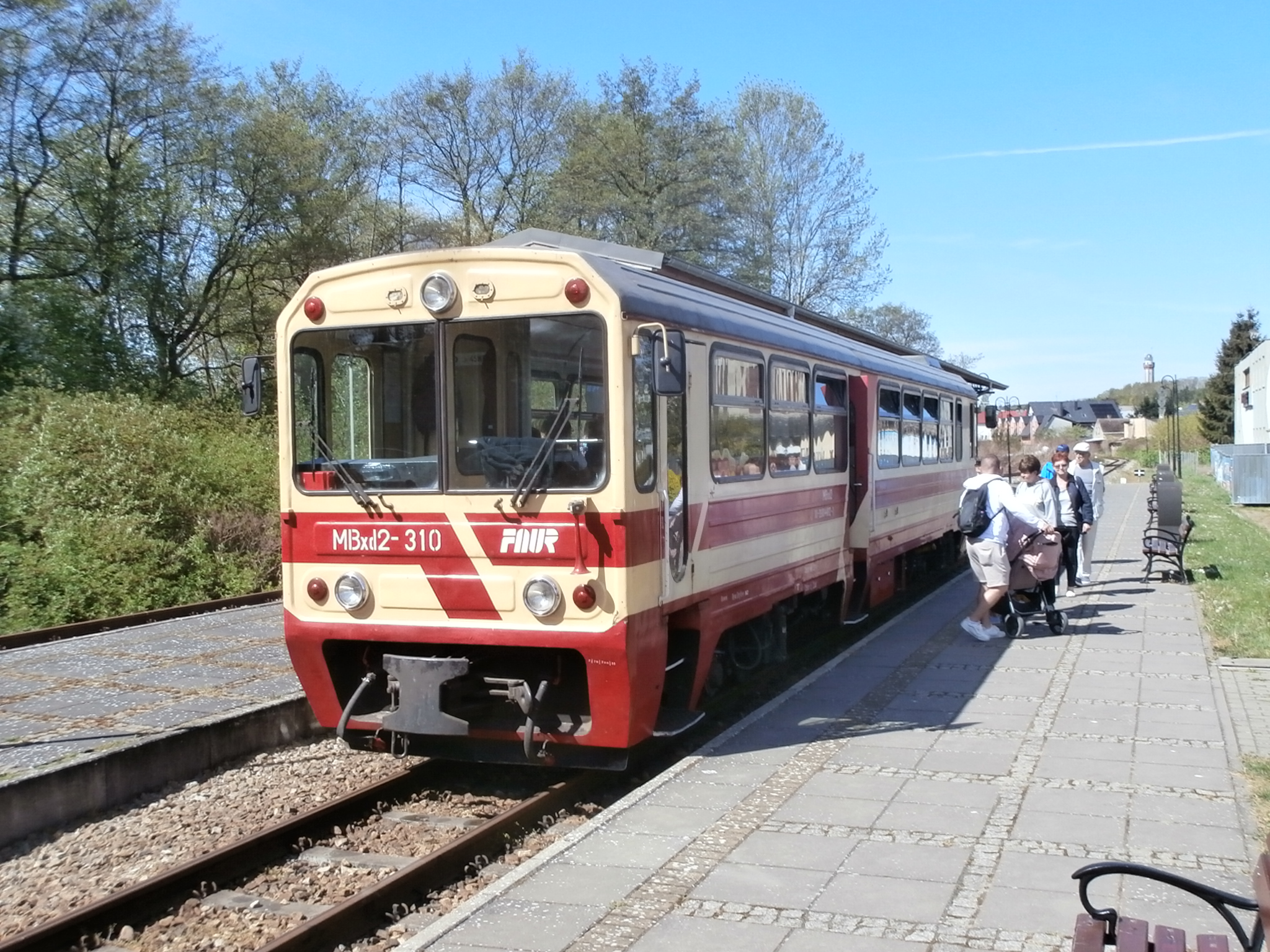
Although the season was low, the narrow-gauge railcar kept running between Trzęsacz and Pogorzelica, here caught in a station in Niechorze. Note the lighthouse in the distance.

The R10/R13 cycling trail between Niechorze and Pogorzelica runs through a picturesque forest parallel to the railway. This part of it is a proper cycling path, accessible by any bike and offering conditions to move quite fast (and in a lovely scenery).

Between Pogorzelica and Mrzeżyno in the middle of a forest one can come across the Baltic Pipe gas pipeline. The first question which popped to my mind when I saw such wide corridor in a chopped down forest was about the diameter of the pipe(s). Hope it is launched soon.

The cycling trail in some places offers rest / leisure spots for cyclists – here on of them in the middle of a forest close to Pogorzelica. I have run across few cyclists on my way, but blame the low season and windy weather for that.

Kołobrzeg which I visited on my way from Rewal (first lodgings) to Ustka (second one) was anything, but enchanting to me. I see no rationale for popularity of the city. The only nice place I found there was a park separating the beach and the city – a gorgeous area for strollers and cyclists.

To the right, the beach on the eastern edge of Ustka, lit by the late-afternoon sun. Here not as few tourist as in western parts of the seaside, also fewer visitors from Germany (and cars on German plates) can be spotted.

As it turned out at the Ustka train station, wczasy wagonowe are not necessarily the relic of the past. Those carriages sitting at the sidings seemed inhabited by people, who came there by the silver Volkswagen SUV with the trailer. As I peeked into the carriages, accommodation conditions in the carriages dating back probably to 1960s wer dismal.

Probably few know Ustka once had a shipyard. These days premises are rundown and skeleton of ship outside the shipyard building is turning into rust. If those facilities were to be torn down and the land cleared up, attractive tourist area would emerge.

Ustka has made a tremendous use of the EU funds to restore its buildings to bring back the climate of a fishmen’s town. The sad side effect is that too much soil has been concreted over. This mistake will need to be reversed in some time.

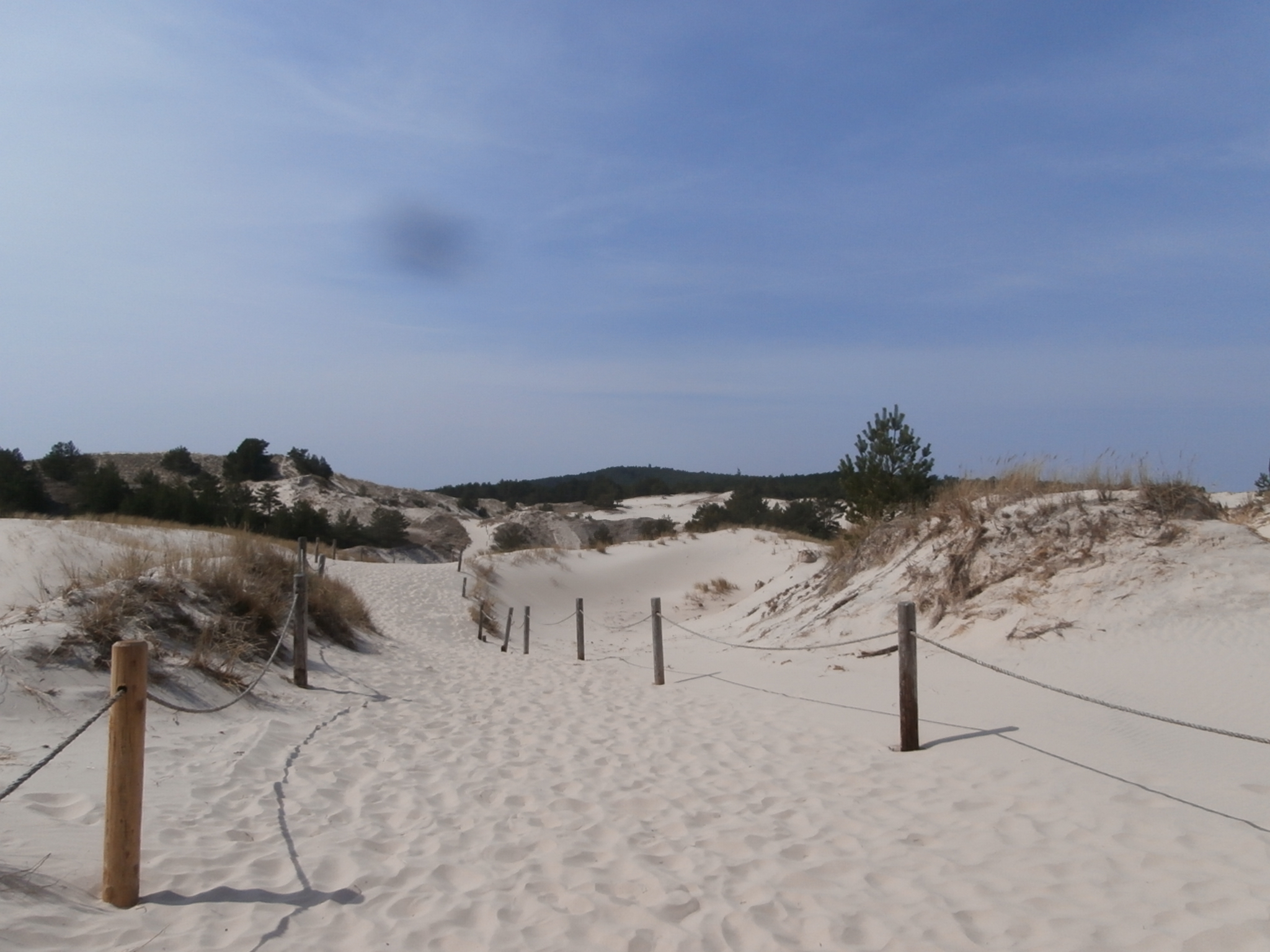
Sand dunes in Słowiński Park Narodowy are the only ones in Poland. I popped over there on the warmest day of my stay (Thursday, 19 May) when temperature topped +26C. Waddling up and down through the moving deep sand in full sunshine was not the biggest pleasure, yet the sight of unusual landscapes make up for inconveniences.

Of course, one cannot walk anywhere, but has to stick to fenced-off trails. Yet, as you can see, the dunes do not resemble a typical deserts – several coniferous plants have grown on the sand and prevent it from moving too fast.

The last snap comes with an Intercity train about to depart from Ustka station. The town has three IC connections per pay, offering direct journeys to Poznań, Wrocław, Katowice, Kraków and Przemyśl. To my surprise, there is no direct connection to Warsaw, which is a bit of a letdown.

Sunday, 8 May 2022

Pandemic diary – April 2022 (actually its second and third decade)

Tuesday, 12 April 2022
500,000,000 infections worldwide. At some parts of the world do not pretend it is all over…
Worldwide, the 7-day average number of new infections drops below 1,000,000, for the first time since 27 December 2021.

Friday, 15 April 2022
In its pursuit of pretending the pandemic is over, Poland switches to weekly reporting of new cases and deaths. Worth noting hospitalizations were also be reported weekly from the beginning of April, but so far nobody bothered to prepare such a report.

Monday, 18 April 2022
The 7-day average of new infections in Poland declines below 1,000. Given scant testing and the fact data come from Easter Sunday (the reporting is continued despite the promise to cease it on daily basis), reliability of the stats is questionable.

Tuesday, 19 April 2022
The 7-day average number of new infections in Poland bottoms out (for a while) at 799.

Tuesday, 26 April 2022
The 7-day average number of new infections exceeds (due to base effect) 1,000 for a day. Dumping backlog inflates also the 7-day average of new deaths in the UK which reaches 324 (vs. 291 in the peak of Omicron wave in mid-January 2022), the highest since late February 2021.

Note: I am off for holidays next Sunday. A proper coverage due on the last Sunday of May.

Sunday, 1 May 2022

Winter Timeline 2021/22

This year long-term forecasts for the winter varied from those predicting a moderately mild one to such foreseeing a harsh and snowy season. For the sake of simplicity, I have assumed the truth lies in the middle and a normal winter, with average temperature and precipitation was ahead. With hindsight – subjectively this was the windiest winter in my lifetime.


8 October 2021 – 11 October 2021
A row of days with ground frosts. Warsaw somehow escapes sub-zero temperatures which are reported nearly everywhere else in Poland (low of +0.4C).

25 October 2021
First frost. 7 days later than on average and one of two (the second came next morning) incidences of negative temperature in October 2021 in Warsaw. Before sunrise temperature declines to –0.2C.


26 November 2021
Sleet, then snow, then sleet begins to fall after sunset. It lingers. Ghastly, but as for the first breath of winter, it is light.

27 November 2021
Wake up to see a light dusting of snow fallen overnight, which melts by midday. Barely above 0C, unpleasantly chilly.

28 November 2021 – 29 November 2021
Two days of typical pre-winter, with temperature just above freezing. The former bright, the latter gloomy with sleet in the evening.

30 November 2021
Occasional flurry several times during the day, snow in the evening. At times intense enough to not to melt despite positive temperature.

November 2021 was very warm. Average temperature in Warsaw was +5.3C (vs. long-term average of +3.8C). Stats:
- month-time high: +13.8C on 4 November 2021,
- month-time low: –1.8C on 11 November 2021 (the fourth-highest November’s low after 1950 in Warsaw),
- the warmest day: 20 November 2021 (daily average of +10.6C):
- the coldest day: 27 November 2021 (daily average of +0.8C)
- number of days with snow cover: 1,
- the highest snow depth: 1 centimetre on 27 November 2021.


1 December 2021 – 3 December 2021
All faces of pre-winter, from sleet to plenty of sunshine. Temperature ranging from –1C to +6C.

4 December 2021 – 5 December 2021
First days of thermal winter (average temperature below 0C), with some flurry. Windy and chilly.

6 December 2021 – 8 December 2021
Three chilly, snow-free, mostly gloomy days. Temperature has settled below 0C for good. Colder day by day.

9 December 2021
Woke up to behold a light dusting of snow, yet it does not make the world much brighter. Still cold.

10 December 2021
Finally a proper supply of fresh snow. Sadly, the temperature rises slightly above zero, but the snow melts slowly, since the ground is frozen.

11 December 2021 – 14 December 2021
Temperature between –5C and +1C, with freezing fogs and hard rime.

15 December 2021 – 19 December 2021
A grey, miserable, foggy or rainy thaw. Longing for sunshine whose scarcity is painful at this time of year. But prospects of proper winter for Christmas lift the spirits.

20 December 2021
Some snow showers, some sunshine (after 16 days of continuous gloom), temperature close to 0C, but wind chill close to –10C.

21 December 2021
Finally a day full of sunshine, from dawn to dusk, i.e. for less than 8 hours. Winter solstice beautifully marked. Frosty.

22 December2021 – 23 December 2021
Still below zero, with a light dusting of snow and moderately bright. Weather forecasts for the Christmas Eve chop and change. Keeping fingers crossed for a wintery scenery.

24 December 2021
Now watch out! The first wintery Christmas Eve since 2003 deserves a detailed report!
6:00 a.m. – wake up to see 4 centimetres of fresh snow fallen overnight. Christmas will be white.
10:00 a.m. – temperature creeps barely above 0C.
1:30 p.m. – it begins to snow, at times snow turns into icy sleet. What falls does not melt, despite temperature just above the point of freezing. Light snow continues until late evening.
Day-time high of +0.8C, mean daily temperature: –0.5C. Despite light thaw I count it as wintery Christmas Eve, after 17 winterless ones in a row.

25 December 2021 – 27 December 2021
A series of sunny, yet frosty days. Glorious weather for burning calories during Christmas walks. During that period for the first time since February 2021 temperature dips into double-digit frost.

28 December 2021 – 29 December 2021
Two last days of the first episode of proper winter bring chilly wind and overcast skies, but no precipitation. Temperature drifting towards the point of freezing.

30 December 2021 – 31 December 2021
An abrupt thaw comes around. Temperature rises hour by hour. Freezing drizzle makes roads and pavements slippery before the ground unfreezes. Snows melt quickly. New Year’s Eve is the warmest on the record in Warsaw and in other places in Poland, beating the record warm 31 December in 2006. At midnight, as 2021 gives way to 2022, temperature is +10.2C (the warmest turn of the year since records began in Warsaw).

December 2021 was slightly cold. Average temperature in Warsaw was –0.9C (vs. long-term average of –0.1C). After 8 warmer than average Decembers the weather returned to “normalcy”. Stats:
- month-time high: +11.4C on 31 December 2021,
- month-time low: –13.6C on 27 December 2021 (temperature rose by 25 Celsius degrees within 4 days),
- the warmest day 31 December 2021 (daily average of +9.5C, the warmest New Year’s Eve in Warsaw since records began),
- the coldest day:
27 December 2021 (daily average of – 10.0C, the coldest day in December since 2012),
- number of days with snow cover: 20,
- the highest snow depth: 4 centimetres from 24 December 2021 to 28 December 2021.


1 January 2022 – 5 January 2022
Warm late autumn continues. Cloudy and rainy. Temperatures are high across the entire Europe. Bad news for Gasprom bring a smile on my face.

6 January 2022
Temperature turns negative around midday, then it begins to snow, for the first time in 2022. It was supposed to be a light shower which would melt, but the outturn is a proper precipitation which leaves which powder on the ground.

7 January 2022 – 10 January 2022
The long weekend is mostly sunny, with temperature ranging from –6C to +1C.

11 January 2022 – 12 January 2022
Two miserably grey, foggy and chilly days. I long for spring, which still is a long way ahead :(.

13 January 2022 – 14 January 2022
It thaws out for good, sadly so far without sunshine, but with intermittent drizzle or even hail. Windy as hell!

15 January 2022
Finally a spell of sunshine, yet not a spell of warmth, especially with gusty chilly winds. Temperature around the point of freezing.

16 January 2022
Still windy, but sunless. Around zero, don’t know how chilly it is outside, since I don’t bother to venture out of home.

17 January 2022
A winter squall with thunders, lightnings, hail and snow hits Warsaw before midday. Wind gusts reach 93 kmph. Most of the fallen snow melts in the afternoon after the temperature climbs to +2C.

18 January 2022
Air pressure skyrockets, but bright sunshine compensates for side effects to those suffering from weather-driven headaches. Day-time high above 0C.

19 January 2022
Wake up to see a light dusting of snow which fallen overnight, which had not predicted in ant forecast. It melts over the day, the last day before winters sets in for good again.

20 January 2022 – 23 January 2022
Some moments of sunshine, some intermittent snow showers. Temperature below 0C most of time. Still windy.

24 January 2022
The coldest morning this year, followed by a cloudy day. Temperature soaring.

25 January 2022 – 29 January 2022
A row of grey, gloomy days. All sorts of precipitation, including snow, sleet, freezing drizzle, regular drizzle and rain. Temperature ranging from –2C to +5C, but it’s f**king windy. I long for spring!

30 January 2022
Nadia anticyclone brings damn gusty winds, snow and rainfalls. The upside is that power generations from wind farms in Poland is nearly as high and from coal.

31 January 2022
Finally sunny, wind speed decreases, temperature still close to 0C.

January 2022 was very warm (and abnormally windy). Average temperature in Warsaw was +1.0C (vs. long-term average of –1.5C). Stats:
- month-time high: +11.3C on 1 January 2022 (just after midnight),
- month-time low: –8.1C on 24 January 2022 (single-digit frosts were also reported as January’s lows in 2018 and 2020),
- the warmest day: 1 January 2022 (daily average of +7.8C, still 3.5 Celsius degrees less than on 10 January 2007 which was the warmest January day since records began in Warsaw),
- the coldest day: 11 January 2022 (daily average of –4.2C, quite high, as for a low),
- number of days with snow cover: 14,
- the highest snow depth: 3 centimetres on 7 January 2022.


1 February 2022
Sunny, cold morning, snowy afternoon and evening.

2 February 2022
Wake to see a thin blanket of heavy, wet snow, which is washed away by the rain by midday.

3 February 2022 – 6 February 2022
A few grimy, windy days. Temperature between –1C and +5C. The weather definitely does not encourage to spend time outdoors.

7 February 2022
Heavy snowfall at +0C temperature which starts in the morning and lasts until early afternoon lays a white blanket on the ground, which does not fully disappear by the evening.

8 February 2022
It’s getting boring. Another gloomy, rainy day. Just its length makes up for greyness.

9 February 2022 – 10 February 2022
The first gust of spring. As Poland is between low-pressure and high-pressure systems, wind speed remains high, temperature approaches +10C and the weather is changeable.

11 February 2022
The last dull day. Rainy, then snow. Gusty wind intensifies hour after hour.

12 February 2022 – 15 February 2022
Three days with glorious sunshine from dawn to dusk, frosty nights and mornings. The wind does not ease off, so it feels chilly despite day-time highs well above freezing.

16 February 2022 – 22 February 2022
An ugly pre-spring, with temperatures fluctuating between just above freezing and barely into double-digits, little sunshine and frequent rainfalls, at times turning into sleet. During that period two winter storms wreak havoc across Poland: Dudley on 17 February and Eunice on 19 February.

23 February 2022 – 28 February 2022
Night-time frosts return and are a price to pay for sunnier weather. Large temperature fluctuations on most days and still windy.

February 2022 was anomalously warm, yet far from record-warm. Average temperature in Warsaw was +3.4C (vs. long-term average of –0.4C). Stats:
- month-time high: +10.6C on 16 February 2022,
- month-time low: –4.8C on 13 February 2022 and on 28 February 2022, (being the fourth-highest February low in Warsaw after 1950),
- the warmest day: 10 February 2022 (daily average of +7.3C),
- the coldest day: 1 February 2022 (daily average of –1.1C, one of two days in the entire month with negative average temperature, at the par with the records – also in 1989, 2016 and 2020 there were two February days with negative mean temperatures),
- number of days with snow cover: 1,
- the highest snow depth: 1 centimetre on 2 February 2022.


1 March 2022 – 3 March 2022
Early March brings the coldest mornings since the third decade of January, but with full sunshine and cloudless skies, the afternoons are warm. Colder than usual at this time of year.

4 March 2022 – 5 March 2022
I did not expect to see the snow by next winter, yet it falls several times a day, but melts, as the temperature hovers around +2C.

6 March 2022 – 9 March 2022
The typical pre-spring, rather dull, but with spells of sunshine, rather above freezing, but with night-time frost, rather dry, but with some drizzle or sleet.

10 March 2022 – 12 March 2022
The high pressure system takes over and draws in cold air. Mornings are one of the coldest this, year, with the dawn of 12 March being the coldest since late December. During the afternoons temperatures turn positive. Marvellous sunshine from dawn to dusk (i.e. for around 12 hours actually). In north-eastern Ukraine temperature plunges into double-digit frost, with low of –16C in Kharkov.

13 March 2022 – 14 March 2022
Still cloudlessly, with milder morning frosts and double-digit highs.

15 March 2022 – 16 March 2022
A bit cloudier, yet without precipitation, though the rain is badly needed. Double-digit highs bring the first whiff of spring air.

17 March 2022 – 20 March 2022
An anticyclone brings extraordinarily high pressure, azure skies and large temperatures variations, from below 0C at dawn, to around +10C in the afternoons.

21 March 2022 – 25 March 2022
Getting warmer. Afternoons are more than balmy with highs of around +15C or above, but mornings are still frosty or at least with ground frost.

26 March 2022 – 28 March 2022
Slightly colder, yet without night-time frosts, cloudier, but sadly not a drop of rain. Windy. Dust is whipped up from the dried-up soil.

29 March 2022 – 30 March 2022
Colder, between 0C and +10C, with less sunshine and long-awaited rain. Bracing for the last gasp of winter.

31 March 2022
A little bit of snow falling in the morning, melts instantly. Forecasts for the coming days vary, but for the southern parts of Poland are unsettling.

March 2022 was normal. Average temperature in Warsaw was +3.6C (vs. long-term average of +3.2C). The monthly precipitation was 1.3 milimetres, thus it was the driest March in Warsaw after 1950 (previous driest March was in 1974, 4.9 millimetres). Stats:
- month-time high: +19.3C on 23 March 2022 (a lovely spring afternoon),

- month-time low: –8.4C on 12 March 2022 (colder than in January and in February),
- the warmest day: 28 March 2022 (daily average of +11.7C),

- the coldest day: 11 March 2022 (daily average of –2.0C),
- number of days with snow cover: 0.


1 April 2022
Snow begins to fall the morning and falls over the entire day. With temperature very close to 0C the layer accumulated in the evening reaches some 5 centimetres.

2 April 2022
Wake up to behold masses of wet snow fallen overnight (officially snow cover reaches 15 centimetres at 6:00 a.m.). It snows by midday and then ceases and thaws out. In the evening temperature reaches +5C so the snow and the slush turn into big puddles.

3 April 2022 – 4 April 2022
With overnight sub-zero temperatures what has melted over the day freezes up. The masses of snow gradually disappear.

In later days winter was not actually in sight, yet the proper spring was coming in spurts and shyly. The last (probably) frost this spring was reported on 13 April 2022. The last snow was witnessed in the morning of 19 April 2022. Had my tyres changes for summer ones on 20 April 2022 (same late as in 2012 and 2013, but I could have put it back by 2 or 3 days, especially since during the working week the car sits idle anyway).

April 2022 was cold. Average temperature in Warsaw was +7.2C (vs. long-term average of +9.2C). It was the third-coldest April in my lifetime, after April 1997 (+5.0C) and April 2021 (+7.0C). Stats:
- month-time high: +21.0C on 14 April 2022 (the only day in the month when temperature topped above +20.0C, such low number of days in April when temperature exceeded +20.0C reported for the first time since 2008),
- month-time low: –3.5C on 3 April 2022 (not remarkably cold),
- the warmest day: 14 April 2022 (daily average of +12.6C, lower than monthly average for the entire April 2018 which stood at +13.5C),

- the coldest day: 1 April 2022 (daily average of +0.3C, the coldest April day since 2013),
- number of days with snow cover: 4 (vs. 8 in 2013 – first days of April 2013 were truly snowy and vs. 5 in April 2003),
- the highest snow depth: 15 centimetres on 2 April 2022 (which is the highest snow cover of the 2021/22 winter season and not the record-high snow cover in April – in 2013 it reached 22 centimetres).

Sunday, 24 April 2022

What’s new in the neighbourhood

A yet another photo round-up to keep record of what is going around between the housing estates on the south-western edge of Natolin and the Las Kabacki forest. The big recreational area, called Park Cichociemnych has been undergoing a makeover for some half a year, only the progress of the change is more than sluggish.

On Friday I somehow managed to knock off before 6:00 p.m. (nasty two weeks at work left behind) and stroll through the green areas around with the camera. I first scrambled up Górka Kazurka, partly serving as a track for downhill bicycle riders. Here, I look south from the top of it, towards Las Kabacki. Note the absence of leaves on many trees. In recent years we got used to warm Aprils, while in 2021 and 2022 temperatures have been well below long-term average (more on it in a week).

I walked a few steps, turned around to snap the blocks by ul. Kazury and ul. Pileckiego. Actually not a worthwhile sight, but I wanted to grab a comparative view of the spot against…

Another photo (credits to Anna Soboniak) taken in July 1997. Old blocks of flat have been insulated, new ones put up in early 2000s. One day I will try to take a series of photos for comparison to the historical ones which can be found at Ursynów.org – an excellent page I recommend.

West of Górka Kazurka I see the current progress of works was about digging up the grass, fencing off some areas and laying groundwork for new pavements and cycling paths. The area will get some concrete, but I concede the terrain here was too bumpy to be accessible to elderly, disabled and cyclists on city bikes.

The snap to the right essentially elucidates why I’m love with my neighbourhood. I am half a mile from home and it feels like wild forest area several kilometres from the heart of Warsaw. But wait, I am just a mile away from the nearest underground station!

Here comes the new development, a dog playground, relocated from the area west of Górka Kazurka, closer to the forest. I have not idea whether the facility has been completed, but definitely it is not accessible to residents, with entry gates protected by chains and padlocks. In the background, the technical track of the Warsaw underground.

Another leisure spot transferred from near Górka Kazurka is the picnic shelter, now located in the middle of the birch coppice. Brushing aside cosiness of the place and presence of mosquitos in the summer, a bonfire here might end op nastily… I had been there in late March and can’t report any progress of works.

The shot give the essence of now the modernisation of the park goes on. Dug up grass, heaps of gravel and soil, randomly fenced off land – mess all around. I slightly envy the homeowners from the green blocks by ul. Pileckiego whose living room windows and balconies have a view to the green area – they beat my living room view on Las Kabacki.

Further north, I can run across an Astaldi builders base which used to be a technical facility for the S2 tunnel construction site. The tunnel was opened in December 2021, all finishing works have been done, but the base has not been wound down to restore the green area. I want the containers to be taken away and the concrete to be ripped up. I hold out for a meadow back here!

Through a hole in a fence I can snap how the facility looks like. Lots of rubble scattered, machinery all around. The ugly wasteland should be a green area. I have shortly investigated the reasons why the land has not been cleared up and found only one article which says (financially ailing) Astaldi is about to move out by the end of this year.