Sunday, 31 July 2016

Civilisation winding down?

The pace of progress our civilisation has made over the last decades is impressive and incomparable with any other period of well-researched history. Mould-breaking developments have been made for instance in medicine, engineering, information technology and have left positive marks on our everyday lives.

Thanks to improvement in information exchanges and growing availability and affordability of long-distance fast transport, the world has virtually shrunk. Places out of reach a few decades ago seem now close at hand. Day-to-day unlimited communication with people is now not confined only to those who surround us. Those processes, as I notice, do not have “ever-expanding” character. We seem to be falling victim to them, or they are self-reversing. Just take a look.

Smartphones are the essential tool of information exchange for today’s youngsters, yet for many they have become the prevalent means of communication with the rest of the world. The quite frequent sight of a group of young people all staring at their phones instead of talking to one another is just one of bleak proofs of excessive dependence on technology.

Nearly any place on earth can be reached by air transport within 24 hours, and plane journeys are affordable for masses, yet there is a growing number of places being a no-go areas for tourists; places which a few years ago used to be popular destinations: Crimea, Turkey, Egypt, Tunisia, some Greek islands besieged by immigrants from Middle East just to name a few. Though Poles’ horizons have broadened, their holiday plans have been altered by new global threats, thus Baltic sea shore, despite cold water, changeable weather, wild crowds and sky-high prices of everything a tourist needs, is again the preferable holiday destination. In 1990s Poles would go to the seaside because overseas resorts were out of their reach financially or because they were daunted by the unknown exotic places. Today the seaside is a safer place (with improved tourist infrastructure one needs to admit).

Two years ago, as I roamed around Germany, I did not take into account I could become a victim of terrorist attack in a shopping mall or restaurant. Paris, Munich, Nice until recently used to have all makings of a safe place for tourists and residents. Terrorism is not an entirely new phenomenon in Europe. Munich was attacked during Olympic Games in 1972. Madrid commuter trains were blown up in 2004, London public transport vehicles in 2005. Yet the frequency of attacks and profiles or terrorists have changed. Today we do not witness Al-Kaida taking revenge for military intervention in Afghanistan. Today secret services do not observe terrorists collectively planning an attack together. Today’s fanatic killer is a young brain-washed male on a lonely, unaided mission to murder possibly many people before he dies martyr.

Societies are becoming less tolerant, I wonder whether they will become less outgoing. Will fear of and dislike for the others become a factor keeping people inside walls of their homes?

After the financial tsunami in 2008 many thought the new economic order will change workings of the world. In fact little has changed. Economies have ridden out the storm although one should be far from declaring they are doing well; had they been, interest rates would have been jacked up. Yet the societal change might be imminent. To keep going, people need to earn and spend money; produce and exchange services, yet who how flows between economic actors go no longer is a subject of economic debate, it has become more about politics and social science. From the economic point of view if in a developed economy there are low-paid jobs domestic workers are unwilling to take up, such gap is filled with migrants from less developed countries being a motivated, cheap labour force which moves the economy forward. From the social or political standpoints, migrants are becoming an unwanted element, regardless of their impact on economic growth and well-being of the whole society.

The ongoing social change is reflected in political choices and the victory of PiS in Poland last year is not the most glaring example. Donald Trump’s dreadful popularity in the United States and support for Brexit in the United Kingdom fill me with far more uncertainty regarding future.

I fear that the world is heading towards isolation, on micro and macro scale. Demise of bonds between humans is already perceptible. Decades ago people had a few close friends and had closer (though often not ideal) relationships with families. Today people have hundreds of acquaintances (a good measure is a number of connections on social networks) but despite this not seldom feel lonesome.

Besides, for most of July I felt too comfortably, too carefree, at times lethargic or numb. That state has given way to some sort of anxiety, a gut feeling something bad might afflict me personally in the close future. Hope it is just a mild version of mid-summer blues caused by to humid air ;-)

Sunday, 24 July 2016

Spine, down my spine

A few years ago, while reading results of my medical general check-up, my GP told me by the time I reached forty problems with health would not afflict me, but if I looked after myself well, I would stay healthy until I turned fifty. Then it would all go downhill anyway, since only a tiny fraction of population aged over 50 can boast about excellent health.

I can drop in on a dentist once a year to have my teeth checked preventively or at worst have one of them mended. I visit ophthalmologist at least once in two years to have my eyesight inspected. I get a medical check-up at least once in three years and wait for a spot-on comment that I have my car thoroughly serviced at least once year, so why do I care more about a depreciating tin. The last time I was on a sick leave was in October 2013, after a food poisoning, since then not a single cold caught. I am doing fine, so what’s the point in seeing doctor “just in case”, as some of my peers, who just like me have medical care packages paid by their employers, do.

This might be the thing of the past… Before each warm long weekend doctors advise people who lead sedentary lifestyle not to overstretch themselves. I heard those warnings also before the late-May Corpus-Christi weekend, but did not take them to heart. April and May were stressful, I sat long in the office to meet deadlines and once I saw the back of the dreadful streak, I wanted to make the most of days off. Swimming, cycling, garden and house works in abundance have put a pleasant strain on my muscles. On Monday following the weekend I barely got up from bed, being stricken by a pain down my lumbar spine. I thought the strain, just muscle soreness, would ease off after a day or two. It did not. With varying intensity the aches kept me company for four weeks; being a nuisance at work, at home, during business trips and private travels… I carried on, though there were days I could not remain sitting for more than half an hour; a limitation bearable in the office, yet uncomfortable during conferences or workshops when I could not stand up whenever I wanted.

Having returned from holidays I finally signed up to see my GP at Medicover; on the next day I had my spine X-rayed as prescribed. With the results and a relevant referral I marched to a physiotherapist. It turned out my spine, though not in pristine condition, is not ruined, yet if I do not want it to cause me further pains, I should take up regular exercise and change my habits. The former will not help if I do not pursue the latter.

The very sitting, inevitable if you work in an office, is not a natural position for a human spine, therefore it is crucial to minimise negative effects of sitting long hours. Firstly, do not sit on the tailbone (the Formula-1 driver position). There are two bones around the middle of your buttocks which should absorb the burden of your body as you sit. Secondly, your spine should be vertical as you sit. To allow for this, you should have a chair with properly shaped armrest, monitor ahead of your eyes (not lower, otherwise you will hunch), keyboard and mouse close to you (so that you don’t have to reach out for them and hunch).

Everyday habits also need to be changed not to strain the lumbar spine excessively. If you want to lift something heavy, bend your legs and let your thighs take the strain. Generally, I am switching from squatting and bowing down towards sit-ups and kneeling. I have quite strong legs (riding a bike a lot as a child) and they should take the strain off my spine, yet have to be careful about the knee joints. In other words time to live normally, but without encouraging the pain to keep me company. Unfortunately, over the coming weeks long (> 25 kilometres) bike trips have to be given up. Though I have chosen the bike in size corresponding to my height (XL; 180 – 195 cm), longer cycling takes its toll on my still sore spine, therefore I will most likely enjoy longer rides in late August at the earliest… Today I cycled to Zalesie Górne and back (total distance of around 20 kilometres, one snap on my fb profile) with a short break at my destination and felt I could do with a little bit longer trips, yet my spine calls for a break after some 45 minutes (or 10 kilometres) of recreational cycling…

Oddly enough, Wisła resort today had few visitors, despite conducive weather.

Sunday, 17 July 2016

History being rewritten

The Polish Internet has recently been flooded with humorous memes scoffing alleged accomplishments of Poland’s first back seat driver. The influx of mockery has been spurred by Mr Kaczynski and his servile henchmen (fellow politicians and reverent media) whose claims and deeds are aimed at changing roles of some people in Poland’s most recent history. Thus the official version of history, compiled by impious post-communist elites is set to be rewritten, to highlight roles of under-appreciated figures and to debase those whose merits have been undeservedly overrated.


Comment 1: beyond all doubt, Lech Kaczyński was one of the prominent figures in Solidarity since the inception of the movement, nevertheless no historian so far has dared to assert he had played the second fiddle in the movement.
Comment 2: beyond all doubt, Jarosław Kaczyński, despite holding no other function in the state than an ordinary lower-house deputy, is an actual leader of the group of people who formally exercise executive and legislative powers in Poland. The situation when a man actually takes decision but shuns responsibility for them is abnormal. I actually hope Mr Kaczyński takes over as prime minister.

Who is accountable for killing over forty Jews in Kielce and burning alive more than 300 Jews in a barn in Jedwabne? Minister of education in the PiS government lacked courage to admit those were Poles.
Comment 1: I would not put it down to Mrs Zalewska’s inadequate familiarity with Poland’s history.
Comment 2: A mature nation is capable of admitting to crimes its representatives committed, apologise for them and firmly condemn. Quibbling, as Mrs Zalewska did in the notorious TV interview, does not bring us closer to maturity in this respect.

You might think if Jarosław Kaczyński was not interned with the imposition of the martial law in December 1981, communist regime did not find him dangerous. Got it wrong my dear, the secret services planned to detain him, but accidentally did not do it, even though they had a chance to make up for it when Mr Kaczyński was shortly interrogated in the first days of the martial law…
Comment: You will not turn back time. On that frosty morning Jarosław woke up at ten a.m., went to church and in there found out something bad was going on. No bleak men knocked at his parents’ door to arrest him…

Who can take credit for bringing Poland into NATO? The omnipotent Leader and his crony Krzysztof Czabański! Any contribution of politicians such as Taduesz Mazowiecki, Bronisław Geremek, Aleksander Kwaśniewski? Who would care?
Comment: Wiadomości by TVP have become the most nefarious propaganda tube in Poland since 1989, beating by a long shot all previous SLD- or PO-affiliated circles of journalists and clearly biased coverage by TVN. From time to time I wrench my guts and watch Wiadomości. Selective choice of facts, failure to separate facts from comments and instructing audience what to think are now the distinguishing features of the main news programme, still financed from taxpayers’ purse.

Comment 1: rationally, why mixing up fatalities of a tragic air crash with actual martyrs who died fighting for free Poland?
Comment 2: the decision to bring in Smolensk component into each and every occasion assisted by military forces is already making people laugh it off and in effect denigrates the remembrances of crash victims.

Having vented by anger at the above, I still underline rewriting the history is less detrimental than tampering with the economy (may the clearly debt-financed child allowance programme be enough) or with democratic institutions. The five hundred zlotys per child, a tangible proof how PiS kept their flagship promise, has lifted some people from penury, raised their living standards or simply bribed them off. Other voters could not care less, a few million genuinely believe PiS are mending Poland. Thus PiSites enjoy support reaching 40%, not because they have dismantled the constitutional tribunal, not because they are ruining public finances, but because they are the only party with agenda for Poland. No matter how strongly I disagree with the vision of Poland by PiS, I cannot deny the have what other parties lack.

Below, a derisive poem I could not resist to share, nimbly offending the better sort of Poles who vote for PiS…

BYŁ RAZ…

Był raz grafoman, wierszokleta,
Dziennikarzyna z bożej łaski.
Lecz się przedstawiał: wieszcz, poeta,
I ciągle czekał na oklaski.
Choć jego wierszy nikt nie czytał,
On niepowodzeń znał przyczynę!
Zmowa! Grubymi nićmi szyta!
Jeszcze - odgrażał się - wypłynę!
Podkreślał stale swe zasługi,
Że on jedyny pisze z sensem,
Sam się ogłosił raz i drugi,
Że niby polskim jest Brassensem.
Mając, jak twierdził, lekkie pióro,
Oceny podjął się z ochotą,
Co dobrą jest literaturą,
A szczerze mówiąc, był idiotą.

Był raz kabotyn, aktorzyna,
Przez całe życie grał ogony,
Lecz to nie moja – mówił – wina,
Że jestem wciąż niedoceniony.
Nikt do teatru nie chciał chodzić,
Oprócz lizusów i klakierów,
Lecz przekonywał: nic nie szkodzi,
To spisek bandy reżyserów.
Innych nazywał szmirusami,
Albo wyrażał się z przekąsem,
Kpił w żywe oczy, a czasami
Złośliwie mruczał coś pod wąsem.
Czy to był Hamlet czy Medea,
Do złej gry robił dobrą minę.
Chwalił się: zrobię dobry teatr!
Ale, niestety, był kretynem.

Był raz szarpidrut, muzykancik,
Blade pojęcie miał o jazzie.
O mistrzach mówił: dyletanci,
A sam rzępolił ile wlezie.
Choć jego grania nikt słuchał,
Grał w swym mniemaniu pierwsze skrzypce.
Czeka mnie – mówił - niezła fucha,
O władzy śniąc i złotej rybce.
Choć słoń nadepnął mu na ucho,
Wielkiego znawcy przyjął pozę,
Dziś z talentami – rzekł - jest krucho,
Tylko ja jestem wirtuozem.
Wmawiał, że jest muzycznym tuzem,
Choć był podrzędnym muzykantem,
Zapewniał: ja gram dobrą muzę!
A tylko zwykłym był palantem.

Był raz pacykarz, beztalencie,
Malował straszne bohomazy,
Lecz przekonany, że ma wzięcie,
Wystawiał wszędzie swe obrazy.
Nikt tych obrazów nie oglądał,
Świeciły pustką wernisaże,
Winę w kolejnych widział rządach,
Mówiąc: ja jeszcze wam pokażę!
Wszędzie miernoty i nieuki,
A ja? Świat jeszcze o tym nie wie,
Że to prawdziwe dzieła sztuki.
Reszta - gryzmoły i badziewie.
O innych mówić zwykł z pogardą,
Ja się – rzekł - znam na dobrej sztuce!
Swój kicz nazywał awangardą,
A był zwyczajnym, pardon, bucem.

Był raz polityk, nieudacznik,
Z rozdętym ego, z kompleksami.
Z nim osobnicy dość dziwaczni,
Nieudacznicy tacy sami.
Zebrał do kupy pacykarzy,
Niedocenionych wierszokletów,
Wziął dyletantów, dobrał łgarzy,
Wiedząc, że nie brak im tupetu.
Obiecał im: będziecie wielcy!
Sam przy tym się dowartościował.
Więc maszerują wierni strzelcy,
Historię pisać chcą od nowa.
A polityczna kusi scena,
Więc większość poszła jego tropem,
By ponoć z woli suwerena
Naprawiać Polskę, świat, Europę.
Dobrał frustratów, kabotynów,
Zawistnych, mściwych oszołomów.
Omamił, wezwał ich do czynu:
My nie poddamy się nikomu!
Dał szansę wszelkim grafomanom
I sam cytuje hasła wzniosłe,
To wszystko nazwał Dobrą Zmianą.
A jest zwyczajnym tylko posłem.

© MKWD (Muzyczny Kabaret Wojtka Dąbrowskiego)
Druk: tygodnik Passa, nr 26 (816), 30 czerwca 2016


Those interested in the alternative version of truth, seeking to free their minds, are advised to indulge in reading in Jarosław Kaczyński's autobiography. I am looking forward to borrowing this book, as I am not going to purchase it and support Mr Kaczynski financially nor contribute to higher popularity of the book measured by number of paperbacks sold. If I come by it, I promise to review it.

Sunday, 10 July 2016

Wroclove

If there is a city in Poland for which I could leave Warsaw behind…
If there is a city in Poland whose beauty enchants me every time I visit it…
If there is a city in Poland whose energy recharges my batteries instantly…
Only Wrocław meets all criteria above. Unfortunately, moving to Wrocław would involve professional demotion (it terms of duties and pay) and the vision of my career ceasing to thrive so far has prevented me from considering relocation to Wrocław.

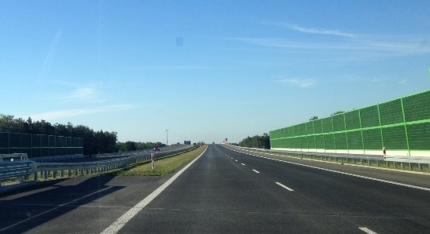
From 1 July 2016 Warsaw and Wrocław are eventually linked by network of motorways and expressways. The missing section of A1 motorway, from Stryków junction with A2 motorway down to Tuszyn, where it meets short section of A1 built in 1980s, serves as eastern bypass of Łódź and connects with S8 expressway running straight into Wrocław. Thus once you get onto S2 or S8 in outskirts of Warsaw, via A2, A1, S8 and A8 you may cover the distance of around 350 kilometres between the capital of the country and the capital of Lower Silesia without even having to downshift from the highest gear. If you stick to speed limits, the door-to-journey should last no more than three and a half hours (compared to at least five hours five years ago), beating Pendolino trains, which, if booked early cost less (unless your car carrier at least three people) and cover the route within three hours and forty three minutes (please add to this journeys to train stations in both cities).

When choosing how to get to bigger cities in Poland, Kraków is the only one where it is definitely more comfortable to go by train. For Katowice, Poznan and Gdansk I would be indifferent between car and train – both rail and road connections are decent and while station-to-station train travel durations are unbeatable, in terms of door-to-door journey times, vehicles make up… Łódź and Wrocław are the destination preferably reached by car…

I was lucky to stay there overnight and despite tight agenda (end of workshops on the first day at 5:45 p.m. and kick-off at 8:15 a.m. on the next day) my companions and I managed to reach the market square, take a short walk around this part of city in the rain, then checked in to one of numerous eateries to lounge about there until late evening. Only the weather was playing tricks with us. Sunny all day, with one intense shower, then two intense rainfalls caught us at the beginning of our trip to town and as we were waiting for taxis to return to hotels…

Wrocław beckons and a friend has advised me how to get there cheaply and quickly. As it turns out, Ryanair offers cheap return flights from W-wa Modlin to Wrocław for mere PLN 18.00. For accommodation, I strongly recommend two Ibis Budget hotels – Wrocław Stadion and Wrocław Południe (the latter can boast about better transport link to the city centre) where an overnight stay without breakfast booked in advanced can set you back a dirt-cheap PLN 39.00 (also for a double room).

Over the week ahead for the first time since late May I am not going to spend any night away from home, nor even venture away from Warsaw for the whole day. A strange feeling. The weather in the coming two weeks is rather going to resemble what we saw in July 2011. If showers and spells of sunshine are about to alter, relief from the heat will be conducive to drawing pleasure outdoor activities) and shortages of underground waters stand a chance to be replenished. Yesterday I cycled for the first time since nearly a month, today I’m bound to take another ride.

Sunday, 3 July 2016

Belated reflections on Brexit…

…because writing on one adventure needed to take precedence, as thanks to committing my thoughts to the blog, I have gotten the story off my mind, at least temporarily… From time to time I wonder whether mere writing, without hitting the “publish” button would not suffice…


Some musings on the same topic, published on the same day, here on W-wa Jeziorki.

Those familiar with the theory of economics, surely know the concept of certainty equivalent. To put it simply, individuals prefer to be certain to receive a small amount / quantity of a good rather than take a risk to get a chance to receive larger amount / quantity of the good. This notion hinges upon preference of humans to eliminate uncertainty in life and hold on to what one can be sure of. In economic and social behaviours of individuals the theorem appears to hold true, but behaviours of masses (less often in terms of economics) more and more often call it into question. Notwithstanding, I am not wiping my eyes in astonishment. Back when I was a student, I was told by lecturers interest rates could not drop below zero. How short it takes to prove wrong notions that had lasted for decades…

There is no absolutely perfect thing in life. You cannot expect to have a perfect spouse, friends, children. There is no perfect job, no perfect house, no perfect holidays, no perfect vehicle. If you thought long enough you would find something to enhance in everything that surrounds you. Imperfection is an indispensable part of our lives, hence we ought to accept it and live with to the extent it is tolerable or strive to change it where it goes beyond acceptability. Having written this, I do not condemn striving for perfection, which in essence is praiseworthy, as long as pursuit of perfection does not make you lose your mind.

The Brexit referendum, or rather its result, is a spot-on example of rejecting an imperfect, yet decent and predictable solution. Membership in the EU has not been devoid of drawbacks, yet once you throw the baby out with the bathwater, you ought to have a clear and feasible idea how to fill the bath again.

This brings back a memory of a referendum held in Warsaw in October 2013 whether to oust the then-mayor, Hanna Gronkiewicz-Waltz. The campaign of Mrs Gronkiewicz’s opponents focused on her presidency’s shortcomings, but did not go beyond kicking her out of office, i.e. shed no light on any plan how to improve the state of affairs in Warsaw once she is deposed. Inhabitants of Warsaw discerned this lack of constrictive alternative and voted their feet by not going to polling stations. Consequently, the referendum was deemed invalid due to turnout below validity threshold.

The Brexit referendum is astonishingly similar to Polish parliamentary and presidential elections in 2015 in Poland. Platforma Obywatelska and president Komorowski in early 2015 were akin to the EU: they offered stability and predictability, yet were self-focused, complacent and out of touch. Yet Poles and Brits have turned their back on stability and predictability and opted for a change. But watch out, in all three votes the winning side had a tiny majority. 51.89% of Brits voted to leave. 51.55% of Poles voted for Mr Duda in the run-off, PiS scored 51.09% of seats in the parliament. Mathematically such results tip the scales, yet just like a glass can be half-full or half-empty, they mean nearly half of voters who exercised their right are displeased… 

Similar tendencies are witness across the world. In Austria in the recent election, though the result has been overturned, an extreme-right candidate scored around half of votes. On the horizon looms an imminent threat of Donald Trump becoming the president of the United States, which given the country’s democratic tradition and civic awareness of its residents, is horrifying and gives lie to all fairy tales of what features a candidate for this office should exhibit.

What manifests itself on macro scale can be witnessed on the level of individuals. I have seen several people being so weary or dissatisfied with their jobs that they grabbed any opportunity to move over to a different company. Usually with hindsight they regretted their decisions and humbly admitted their previous workplaces were not that bad, but their inner desire to change was stronger than sound judgement… On the other hand, despite allegedly record-high number of divorces and informal relationship break-ups, among my friends, acquaintances and workmates aged 25 – 50, I do not see many people quitting their partners because of a crush / infatuation / fascination with someone else, or just seeking a fleeting romance to taste a change (I may have bad insight, since the latter is not something one should boast about and what is rather kept in secrecy).

A cool head tells me each decision akin to remain-or-leave question faced by Brits in June 2016, should be preceded by a substantiated cost and benefit analysis. Whatever is in question, I can bet neither of two solutions under consideration is perfect, yet if you dissect them, spot advantages and drawback of both and sensibly decide which prevail, you are more likely to make a reasonable decision, instead of letting yourself get carried away by emotions (a fodder for wicked populists) or herding instinct.

Unless ruling elites finally stop being busy looking after themselves and realise what causes masses to throw away stable and predictable schemea and dive into the unknown at any price, humanity will be on slippery slope. 

Besides, I would not simplify the matter and point at immigration (whose meaningful contribution is beyond all doubt) as main driver of voting in favour of Brexit. Europeans living in the golden age (which might be now drawing a close) for decades have not experienced war, deprivation and thanks to quite evenly distributed fruits of long-lasting high economic growth have had their needs and whims met. They have grown bored of peace and abundance and instead of appreciating what they have, keep seeking some new impulses, an undefined change, without taking heed whether it would bring more harm than good.

W dupach się poprzewracało, tyle w temacie :(

Thursday, 30 June 2016

…Take the moment and make it perfect

Shortly before I set off for a quick sightseeing trip I lived through 15-minutes-long episode I could not get off my mind for the past two weeks.

15 June 2016, Wednesday.
A workmate who had decided to attend the same conference I did turned up around 9:00 a.m. As his decision had been kind of belated (or to put it coarsely, he had not been far-sighted), he had not managed to find a room in a hotel where the conference was held. He was planning to leave before evening to return to Warsaw around dusk, yet when it turned out my single room was in fact a double room with two single beds, I decided to give in to his entreating and put him up overnight, illegally. Because we had one room entry card, we had no choice but to go to most places together. As I spoke on the phone to another colleague, he advised jocosely we hang around separately, since I would be scaring off his prospective clients and he would be scaring off all women interested in me…

16 June 2016, Thursday
Early morning. The workmate is kind of languorous and indecisive; two traits I cannot put up with when they are exhibited by fellow males. I delicately urge him to leave the room before 7:30 a.m.. He insists on eating a breakfast in the hotel restaurant, while I keep telling him just like in almost each and every hotel, the restaurant crew would ask him about room number and thus his free-riding would come to the light, not the course of event we both would wish for. I walk downstairs to consume my duly paid breakfast and leave him packing his stuff in my room. While I finish eating, I see him strutting about outside the hotel. Then I notice a missed phone call from him. We work together on day-to-day basis, so I overcome my irritation and walk off outside to shake his hand and wish him a good journey… He marches to his company car, while I take delight in breathing in fresh warm morning air. The past twenty two and half hours proved lack of company is better than any company…

I briskly stride towards the hotel making a plan to visit the swimming pool (went there once yesterday, but since it has been paid for, why not use it?) and in my state of sheer bliss I fail to notice a young woman crouching over an open suitcase. She begins a conversation:
Woman: Excuse me sir, does sir know how to call a taxi to the train station in Town?
Me: At the moment unfortunately not, but I am just finding it out (grabbing the smartphone from my pocket and looking for a number to order a taxi cab from Town).
Woman: The taxi driver was bound to pick me up at 7:30 while my train to Warsaw departs at 8:03…
Me: I am afraid you have some twenty minutes left and waiting for a taxi is kind of risky. If you are to make it to the station, I will give you a lift. I will just fetch the car keys and documents from my room and off we go…

While I was nearly running back with stuff necessary to fire up the car, my thought was that the taxi driver has pitched up in the meantime and I my fit of help was gratuitous…

Woman, still squatting over the open suitcase: I thought sir was joking and ran away. Sir is very nice.

From the next ten minutes I remember that:
- we kept talking (or heads off) during the entire journey and definitely were on the same wavelength from the very moment we got into the car, however I cannot recall well subject matters of our chat,
- I felt addressing each other Pani / Pan was absurdly unnatural since with newly met people on social occasions I am on name’s terms from the very beginning,
- I had to ask her to find a route to the train station on her mobile phone (with hindsight I have learnt my new company swanky smartphone has an up-to-the-mark navigation),
- she was somewhat frightened by my style of driving, while I was slightly fast and furious behind the wheel,
- when for a moment we talked about football (Poland was due to play with Germany later that day), I missed an opportunity to sound out whether she has a husband or boyfriend (by asking a casual question whether her husband or boyfriend is a football fan),
- when I parked next to the station she asked me for a business card and since I had left them in the hotel. I told her my name and private phone number and held back from asking her about hers, since my thought was that in such situation asking her for phone number would be a step too far. In my awkward reasoning I had showed immediate initiative and resourcefulness and if she wanted to pay back as she was promising when getting off the car, she would make the next step, if not, imposing myself was a bad idea.

Some four or five days later I realised I did not know her name, where she worked and given my poor memory for faces, I would not recognise her if we met again. But this was the second time (let’s pass over the first one in silence) over three months when I met a woman for the first time and for the second time some kind of chemistry (and spontaneity) was in the air that instantly shortened the distance between us from the word go. Come to think of it. So often two people deliberately date and both struggle to keep up a conversation while out of the blue you can run across somebody accidentally and talk with them (if time permits, for hours) effortlessly.

22 June 2016, Wednesday
I get a text message from my team-mate. She writes a courier has delivered a parcel for me, undersigned “with thanks from Company XYZ”. Kind of confused I google the name of the sender and learn Company XYZ was one the partners of last week’s conference. Whether the bundle’s arrival is an implication of the pleasant adventure, or just a follow-up to a cordial exchange of business cards will remain a mystery until 4 July when I return to work.

Looking back at the situation, there is no clear reason why I cannot get it off my head. The woman might be a happy wife and mother to two small lovely children. The woman might also in a long-lasting not formalised relationship. If I knew that, I would have simply come to terms with it, put giving her a lift on a list of good deeds I have made in life and give it a rest once and for all.

Twists and turns of life are frequently driven by coincidences. As the old saying goes, luck is an opportunity not missed. In this case, I hold it against myself I have not seized the opportunity. I can neither give up nor move on…

Or alternatively, if she knows how to get in touch with me and (rather) has not done it (cannot determine it, until I open the parcel) it is high time I gave over…

Saturday, 18 June 2016

Ogrodzieniec, castle

When I began travelling in business some five years ago I had a sense of excitement prospect of getting about brings out in people. With time it turned out most trips taken as part of my duties are kind of tiresome and involve more hassle than pleasure. And frequent sightseeing which I thought would be the order of the day, turned out to be impossible to pursue, due to tight agenda of the day, tiredness and priority of travel companies to return home possibly quickly.

An ideal business trip if I am do take a detour to draw some pleasure from visiting new places most often needs to meet three conditions:
1) actual destination should be a place hard to reach by train, so that using the private car is justified – this gives flexibility and saves time when moving about (does not apply to main cities, such as Poznan, Wroclaw, Gdansk, Krakow),
2) the agenda should give some headroom for spare time for leisure,
3) I take the trip on my own, or have companions who at least don’t mind such sightseeing.
The three conditions are all met on average twice a year, sadly…

Last Thursday I took such detour when return from a conference. Conditions 1 and 3 were met, however necessity to catch up with work accumulated during the previous day of the conference left me hurrying to make my way to Warsaw. Despite this I ventured to Zamek Ogrodzieniec, one of the magnificent sights in Jura Krakowsko-Częstochowska, one of Poland’s still underrated pearls. I turned up there at nine o’clock, but the ticket office was… closed despite being scheduled to be opened at that hour. I hang around for a quarter, took delight in the beauty of the place, picked up a few phone calls with workmates urging me to handle the stuff I was meant to deal with, thus had my impatience stirred and eventually I marched back to the car. A shame to admit it ended up like this. Looking forward to visiting those regions again.

Since tomorrow I’m setting off for holidays, to take some rest and think some things over, the next posting will be due in early July. Over the coming days I will be keeping my fingers crossed for the Remain option and if my hopes are dashed, will turn my smartphone on to watch the rollercoaster… Take care!

Sunday, 12 June 2016

Swiss Francs, no easy way out

One of pre-election campaign promises made by president Duda and the bevy of politicians he hails from was a bail-out for FX mortgage borrowers ensnared into toxic loan agreements and trapped in their unsellable properties for years to come.

In January 2016, exactly a year after the Swiss currency had been freed to float, Mr Duda’s office laid out a proposal of converting CHF mortgages into PLN at a “fair rate”, different for each debtor and reflecting benefits received by debtors on account of favourable CHF/PLN rates before September 2008 and lower interest rates in CHF (for broader explanation in plain language click here and scroll down to the third paragraph from the bottom). The proposal has been assessed as hazardous for the Polish banking system and… shelved. Five month on, the sketch of the solution has not developed into a draft law ready for legislative process… Which is reassuring, since if Mr Duda’s experts are mindful of dire consequences of banks going under or loss of trust among foreign investors, they have held back from pursuing it and set out to reshape the proposal…

On Tuesday the “CHF task force” held a fifty-one minutes long conference, during which they attempted to outline the major conclusions of their work on the bail-out scheme until now. I will be nasty, but I will exercise my right to speak it out… This was one of the most ludicrous conferences I have ever seen in life. I have got accustomed to listening to politicians who speak a lot and say nothing. This time self-styled economic experts have told a story of guys who met up several times to sip coffee, munch biscuits and waffle on quandaries of benighted individuals who wanted to chase their dreams too much…

OK, the malice cap has been reached, time to move on to what audience have been spared, namely details…

The participation in the bail-out will be voluntary, what in practice means some better-off borrowers might not decide to get rid of their Swiss Franc burden, in practice they will continue to bet on depreciation of CHF in years to come. I personally know people who accumulate savings and hope one day they pay off their whole mortgage with one shot at favourable CHF/PLN rate.

The bail-out package consists of several measures distressed debtors could choose between, however I still cannot make out whether they are mutually exclusive or not.

One interesting measure which could theoretically be implemented with another one is the obligations to lenders (banks) to refund the borrowers the overpaid currency spreads. I came, I saw, I did not understand at all. This concept leaves more questions than answers. Firstly, what would constitute an overpaid spread? Banks naturally earn on difference between rate at which they buy and sell foreign currencies, whereas the problem with the CHF mortgages was that spreads were far higher than reasonable (bid-ask spread often above 6%)… So would lawmakers define a reasonable spread banks had been entitled to charge, or would they set National Bank of Poland rate as benchmark? Secondly, would banks give this money to borrowers’ hands or would they obligatorily prepay mortgage loans? Thirdly, would the refund include penalty interest accrued for period between it had been unduly charged and the day of refund? Fourthly, would the measure cover also instalments paid after August 2011 (enacted swiftly the PO-PSL government in reaction to soaring Swiss Franc) when the anti-spread law (amendments to the banking law) came into force?
Fifthly, facing the truth, the banks were not prohibited by the law to rip off borrowers, so would reversing it be interpreted as violation of the precept that law is not retroactive?

The concept of the “fair rate” has been revisited in the presentation. The expert spoke of four variants of the fair rate, however decided to share only two of them with the audience. One draws on the algorithm presented in January 2016, the other would additionally take into account current well-being of a borrower, with debt-to-income ratio (percentage of after-tax income spent on instalments) a key criterion. The very concept of what is “fair” and for who gives ample room for disputes and will most likely by one of moot points if works on the bail-out scheme move on.

Another measure, whose legal feasibility is questionable, is the option for a borrower to extinguish their mortgage debt by renouncing ownership of the mortgaged property. In Poland mortgage debt has recourse nature, i.e. a debtor is liable for it with all their present and future assets. Such scheme again casts doubts whether law does not work retroactively (a bank when it was granting mortgages, relied in creditworthiness assessment on claim on debtors’ assets and income). Incidentally, introduction of pure non-recourse mortgage lending under which a lender could recover from collateral only, could civilise Polish mortgage lending, but at the expense of higher cost of such debt, being the compensation for lenders for relinquishing the recourse to debtors.

The professors mentioned in passing 30 billion PLN as the total cost of their proposal (which one exactly?). No one still knows how their arrived at that figure, but to be honest, to my best knowledge none of the figures presented by any participant of the CHF debate has been backed by substantive calculations or estimations holding water.

The experts (I pull a grumpy cat’s face when I write this word, as Poland’s current ruling elites lack backing of competent experts) also claimed the effects of the bail-out would be spread over around 30 years, yet failed to explain how such spreading over time be brought into line with International Financial Reporting Standards which proscribe to recognise a loss in full amount in the period an entity learns it is going to incur the loss. One of the task force members murmured something about SPVs and securitisation as tools for spreading the cost over time. A word of explanation here… SPVs are used by banks to remove loans from their balance sheets. Some assets (pools of CHF mortgage loans) are swapped for other assets – cash. Hence a bank has its problem solved immediately, provided it sells portfolios of loans to SPVs at face value. If it sells dicey loans at discount, it recognise a loss (or pre-sale write-down) immediately. At this stage the story is not over. An SPV which buys dicey loans from banks must pay cash for it. Cash is an asset which must be funded with equity or liabilities. Who would then provide equity or liabilities? Whoever it would be, they would be exposed to sizeable haircut in their investment, as SPVs would absorb the losses on loan conversions into PLN…

The Tuesday’s proposal has been slated by nearly everyone. Economists criticised it for lack of details (during the conference the task force experts were struggling to answer most questions asked by the audience). Disgruntled debtors, who put faith in Mr Duda’s promises, also do not perceive the unveiled concept of the bail-out package as a step forward.

I suppose PiSites and Mr Duda know well only time may solve the problem of CHF loans and therefore they play on time. Month by month outstanding debt declines as borrowers make repayments and so the scale of the problem diminishes. They fully realise if they run out of money, voters will knock them out of power (if voting regulations are not tampered with), so their spending spree fortunately has halted after 500 PLN child allowance programme kicked off. I bet works on the draft law will drag on for months and by the end of this year the legal framework will not be passed.

Sunday, 5 June 2016

Escape room

This sort of collective entertainment has become popular in Poland pretty recently. I have first heard of it in the summer 2015 and back then there were quite a few such facilities in Warsaw; since then several new escape rooms have sprung up and you need to book a room several days in advance if you want to go there on most popular time slots (Thursday / Friday evenings or during weekends).

The very concept is well-explained in the dedicated wikipedia article (funnily enough, there is no Polish version as of today). It is essentially a battle of wits with the forces that lock you up, so participants need to use their brains to crack several logical puzzles to break out of the locked room. Usually the game has a specific theme around which puzzles revolve. Players need to get to grips with the brainteasers within an allotted time. They win if they manage to find a key to the door before this time runs out.

I ventured to such place on Friday evening with my workmates. Such game is said to enhance teamwork skills, yet we went there off our own bat (and paid for it from our own pockets), not being ordered by The New Factory. The facility we visited was located on the third floor of a tenement in the very heart of Warsaw and was a spacious flat redesigned into three escape rooms and an accompanying office. One needs to invest a bit to create this and I estimate the entry costs at some 2 million PLN, assuming a flat is purchased (I cannot imagine a landlord giving tenant a free rein to build an escape room in their property); running costs is what I find harder to estimate. Plus to attract new clients the business-keeper should bring in new themes from time to time… The facility we went had just one significant drawback, namely it lacked air-conditioning, which in the summer season might be a nuisance, when a few persons are locked in a tiny space with area less than 20 square metres.

Most clients of such facilities are companies which send their staff to escape rooms as part of team-building programmes or just to expend integration budgets. The cost is not exorbitant. We had a discount voucher from a workmate who once had been to the same facility, but to a different room and we filled the room with maximum number of participants and ended up with expense per head below 20 PLN, while an average rate you can expect is around 30 – 40 PLN per person, still a sum which will not break the bank.

Though neither enchanted by the game, nor fascinated by it, I will eagerly repeat it in a while and recommend you also try it out with your family, friends, colleagues or whoever you want to enjoy time with.

After the hour of fun and short sit-down at a café I stroll towards the dance school along the crowded streets of the central part of Warsaw. Compared to how it looked like a decade ago, social life in the centre of Warsaw is thriving. Glad to see more and more people lap up the most beautiful part of the year outdoors. In this respects we are catching up with our Western Neighbours who socialise instead of clamming up indoors.

Sunday, 29 May 2016

The weekend

The long-awaited four days of all-out logout. Corpo-world left behind, not a thought about what lies ahead on Monday, weather fine. A sin not to make the most of it.

Thursday, Corpus Christi.
Morning starts off with mundane stuff, overdue house-cleaning and ironing. Then drove my mother to the nearby cemetery where my maternal grandparents are buried. Before 10 a.m. duties are marked off, the bike beckons to set off for a ride. Cycling through Las Kabacki I head towards Park Kultury w Powsinie. No droves of people, rather few visitors hang around. I need to bear in mind many people participate in Church processions, many are away from Warsaw, while many sleep off and miss out on the excellent weather. It’s sunny, yet only around +20C, pleasantly warm, yet not hot. I sit back for a while then make my way home along southern edges of the forest. I spend the afternoon in the garden where lots of work needs to be caught up with.

Friday, the day in-between
Business before pleasure as they say. I briskly walk to the swimming pool in Piaseczno, return home, switch on the washing machine and the vacuum cleaner. Two hours later I can go outside, clean the car inside and spend the rest of the day working in the garden, sunbathing, then washing the car. I feel my shoulders are slightly sunburnt. A soothing ointment applied in the evening and tomorrow the pink skin and searing will be gone.

Saturday, it’s downhill now
Feel my spine and muscles have had a decent workout. After another visit to the swimming pool reinvigorates me. Just like yesterday few swimmers in the facility. After a round of household chores… The bike beckons again. It’s already hot, +25C and the sunrays not necessarily treat human skin with care. I ride to Zalesie Dolne, nearby former summer resort, currently still a hangout for scores of locals. It’s late morning, yet the area is far from being densely occupied. Some fishy men stick around. I jump off the bike to take a snap with my mobile and post in on facebook. I realise I have just run out of my data packet for this month so I need to fall back on my company phone to turn on the Wi-fi router and make use of the other phone if I am to show off where I am. The whole operations lasts some two minutes, I turn around to get on my bike… Where’s the bike. No one in sight, not a bike in sight. This came to me as a surprise. Who’d want it? The value of my 12-year-old cheapo bike was close to scrap value… Actually the bigger nuisance than loss of the bike is having to walk back home some seven kilometres in full sunshine, without head covering. Once I get to Piaseczno I consider taking a 709 or 727 bus home, yet knowing I am half-way home and I would need to wait on the terminus till the bus departs, then ride its regular route, I decide to continue on foot. Slightly worn-down, I get home before 1 p.m. Spend the rest of the day loafing about and searching for a new bike.

Sunday, today
What a lovely weather. Wind takes the edge off heat. At 9 a.m. I venture to local Decathlon store. I’m looking for a no-frill, basic, yet up-to-the-mark in terms of quality bike for weekend trips (I estimate I cover between 1,000 and 1,500 kilometres per year). I planned to delay purchase of the new bike until late summer when end-of-season sell-offs begin, but the theft has unexpectedly brought forward my plans. I settle for B’twin Rockrider 340 and buy additional accessories: mud flaps, saddle cover and a prop. The bill is reasonable: slightly below 900 PLN with preparatory works included. I ride off the shop and the impression is comparable to moving from a 12-year-old rickety car to a brand-new car. I took a short ride to Ursynów and back to try out the newly purchased vehicle. It’s a no-frill bike, one cannot deny it, yet everything works smoothly and gently and cycling is less tiresome. The change reminds me one can draw lots of pleasure from riding. I promise to have the bike serviced annually and protect it from the elements of weather and thieves, therefore it will be kept in the garage (and then probably in a storage box).

Hope you also had an enjoyable weekend. Exercise done, but has the test been passed?